Get to the Right Product Family First
When snow-melt systems are involved, surface material selection matters as much as the heating technology itself. Among common exterior surfacing options—concrete, natural stone, wood, and composite—porcelain pavers consistently outperform for snow-melt applications.
Porcelain pavers are:
- Dimensionally stable under thermal cycling
- Highly resistant to freeze-thaw damage
- Non-porous, preventing water absorption and spalling
- Consistent in thickness and performance across large areas
Just as important: the porcelain pavers must be exterior-rated. Indoor porcelain, regardless of appearance, does not provide the thermal performance, slip resistance, or durability required for snow-melt conditions.
Narrow Your Selection: Performance First, Aesthetics Second
Once you’re in the correct product family (exterior-rated porcelain), selection becomes easier.
Choose by Look
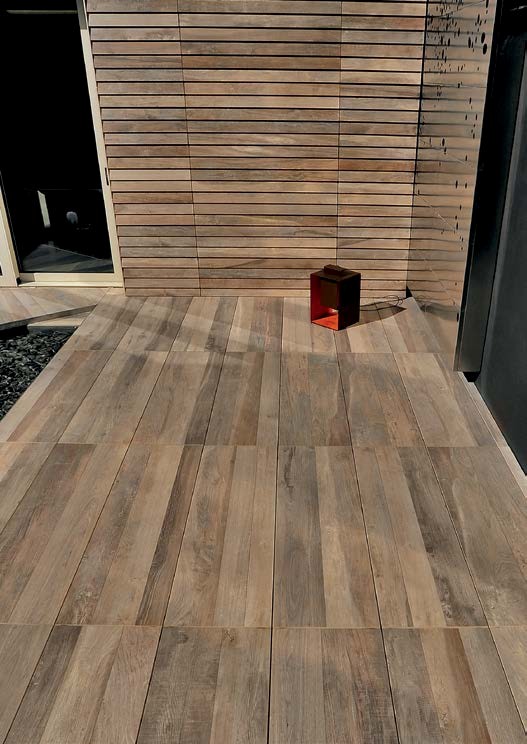
- Wood-look porcelain offers the warmth of wood without rot, cupping, fasteners, or long-term maintenance concerns.
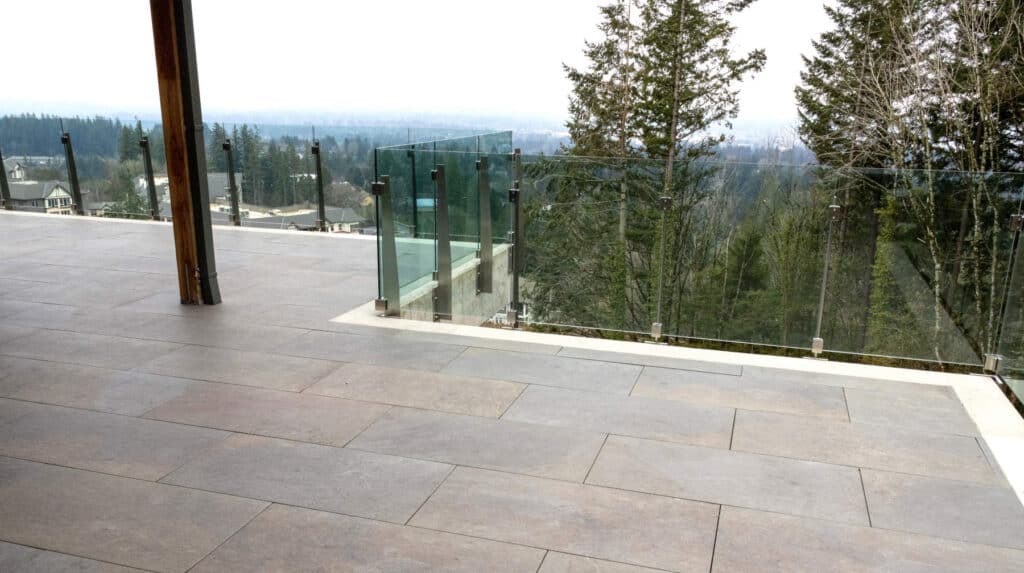
- Stone-look porcelain delivers the appearance of natural stone without moisture absorption or salt damage.
Both are compatible with snow-melt systems when properly specified.
Choose by Color Family
- Lighter colors can support higher Solar Reflectance Index (SRI) values for summer comfort.
- Darker tones may slightly accelerate melt performance in sun-exposed areas.
- Consistency of finish and texture across the field may also be important.
Non-Slip Performance and Water Management Are Non-Negotiable
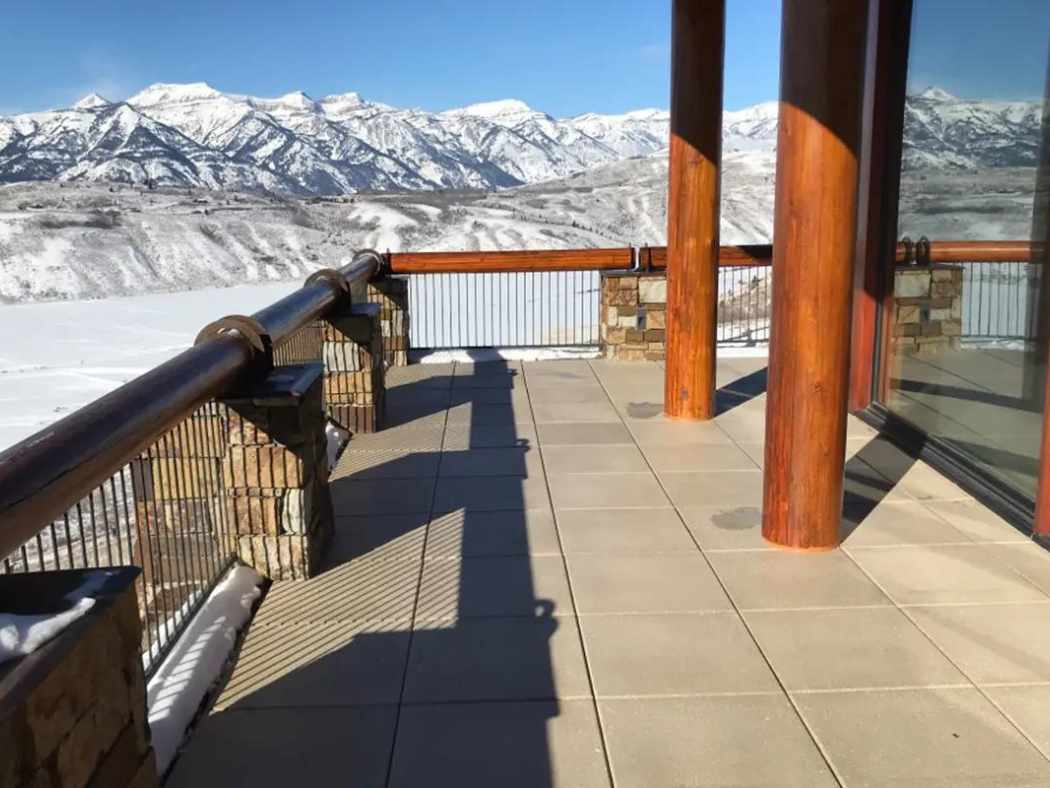
Snow-melt systems create water; they do not create dry surfaces. That reality must be addressed at the surface and system level.
Key requirements include:
- Reliable wet traction
- Textured surfaces, not smooth or polished finishes
- No standing water
Regardless of installation method, meltwater must evacuate quickly.
Drainage Best Practices
- Slope surfaces to drains or edges
- Avoid low spots that allow refreezing
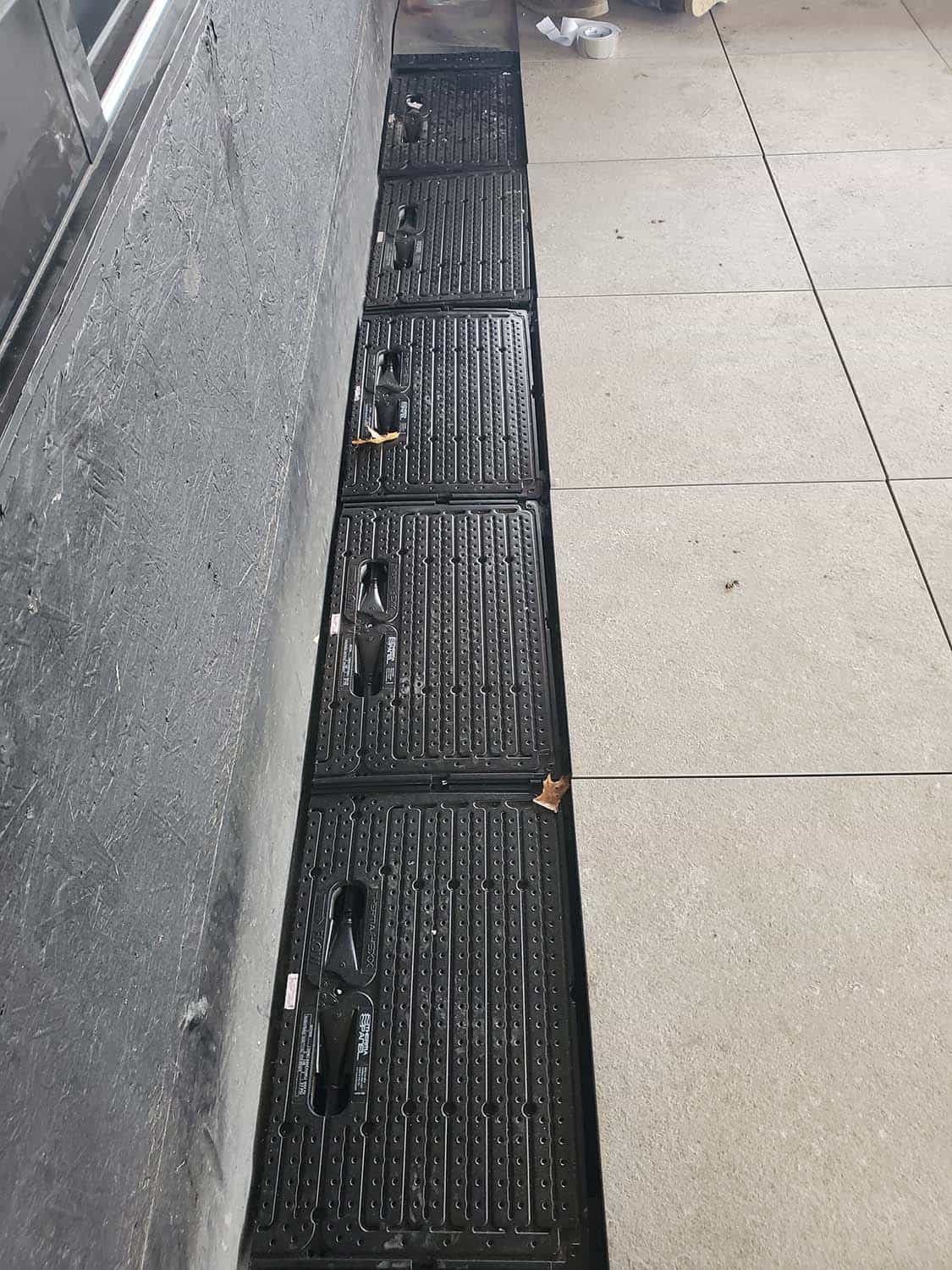
For pedestal installations:
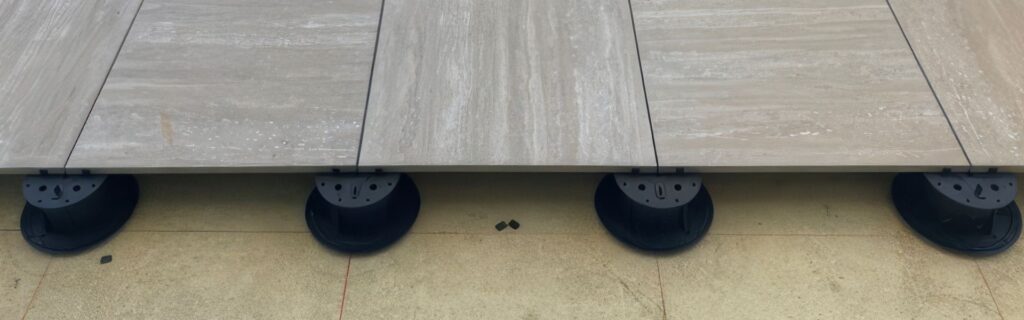
- Ensure spacer tabs allow adequate drainage through the pavers
- Confirm water can exit the system freely without obstruction

Pedestals, Porcelain, and Snow-Melt: Compatibility Matters
When porcelain pavers are installed on pedestals over a snow-melt system, details matter.
Installers should confirm:
- Porcelain thickness and load rating are appropriate
- Pedestals are compatible with heated assemblies
The system allows for:
- Thermal expansion
- Drainage
- Access for maintenance
This is where coordination between surface material, pedestal system, and snow-melt technology becomes critical.
Note: Some snow-melt systems, including Therma-HEXX, are also compatible with thicker paver assemblies, such as 2″ stone or 3″ structural concrete, when project conditions require higher load capacity or increased mass.
Performance Criteria That Matter
A porcelain paver is well suited for outdoor snow-melt systems if it:
- Is 20mm exterior-rated
- Meets ANSI A326.3 ≥ 0.42 (wet)
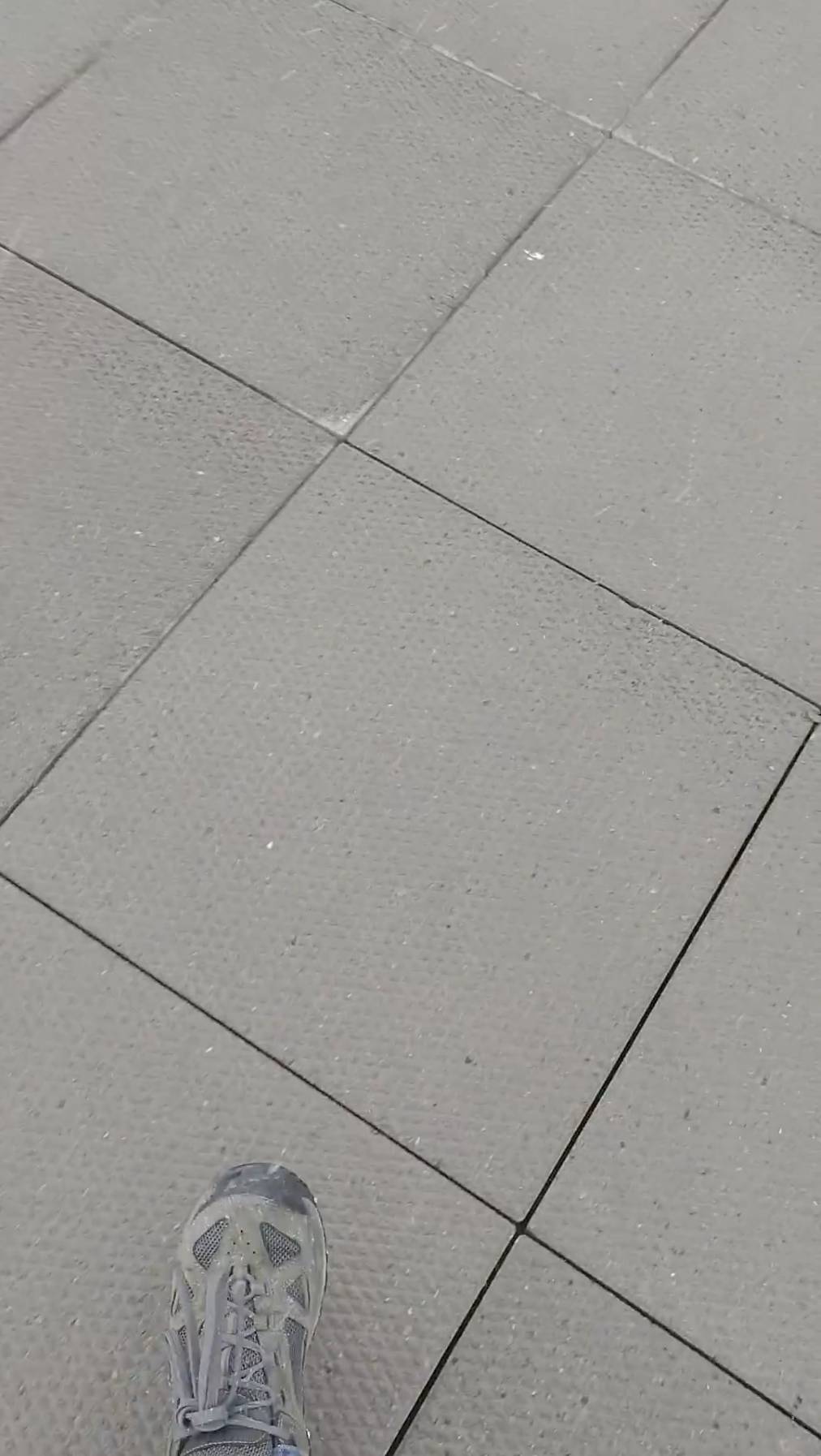
- Carries R11, CL3, A+B+C, or equivalent international slip-resistance classifications
Meeting these criteria ensures the paver performs as part of the system, regardless of heating technology or manufacturer.
Bonus: When you need pavers with immediate availability look to HDG Quick Ship porcelain pavers, typically in stock and ready to ship.

Why This Matters for Snow-Melt Systems
For installers and owners alike:
- Snow-melt systems introduce continuous moisture
- Meltwater + refreeze cycles increase slip risk
- Winter footwear requires predictable wet traction
Meeting ANSI A326.3 DCOF ≥ 0.42 (wet) provides:
- Code alignment in the U.S.
- Reduced slip-and-fall liability
- Surfaces appropriate for real-world winter use
Anchor Standard: ANSI A326.3 (DCOF ≥ 0.42)
ANSI A326.3 is the current U.S. standard for measuring slip resistance.
- ≥ 0.42 (wet) is the accepted minimum for level exterior pedestrian surfaces
- It measures dynamic coefficient of friction—how a person moves across a wet surface, not just how slippery it looks
This makes it the most relevant benchmark for snow-melt applications.
Porcelain Pavers for Snow-Melt Systems: Guidance and Resources
HDG Building Materials’ porcelain pavers meet the performance criteria outlined above and are compatible with a wide range of pedestal systems and snow-melt technologies. We help designers, installers, and owners choose materials that perform reliably in winter conditions without locking them into a single system.
Project resources and guides:
- Snow-melt project example
- Pedestal paver snow melt system guide
- Solar Reflectance Index (SRI) resources
- 2cm porcelain pavers
- 3cm drive-over porcelain pavers
Experience Counts. Talk to HDG.
If you’re evaluating porcelain pavers for a snow-melt system and want a second set of eyes on performance requirements, installation details, or product availability, we’re happy to help. Call 503.360.9551, email sales@hdgbuildingmaterials.com, chat with us online or click.