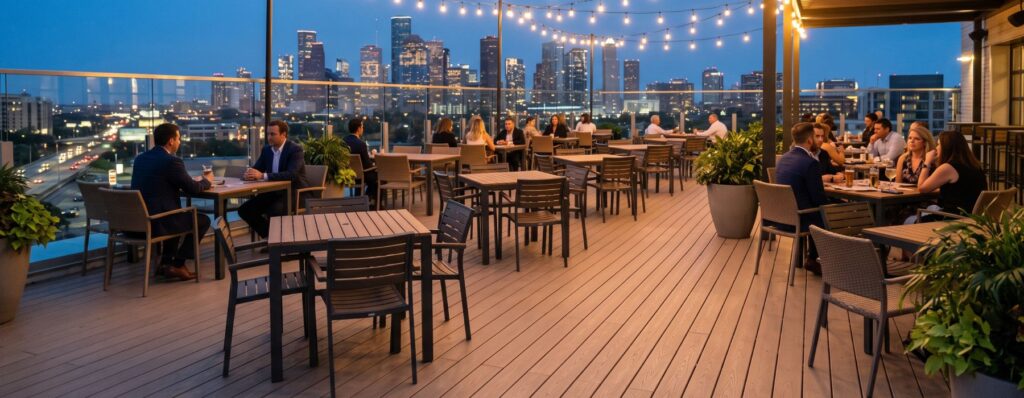
Designing the Right Deck System
There are different ways to build an outdoor deck system. The right approach to an outdoor deck system depends on the surface, application, structure, and performance requirements.
The finished surface gets much of the attention, but the structure and support system below it play a critical role in how an outdoor space performs over time. Framing, pedestals, drainage, and the space beneath the surface all become part of the design.
Whether you’re specifying composite decking, porcelain pavers, natural stone, or another outdoor surface, the right deck system starts with the application.
The finished surface is only one component of a successful outdoor assembly.
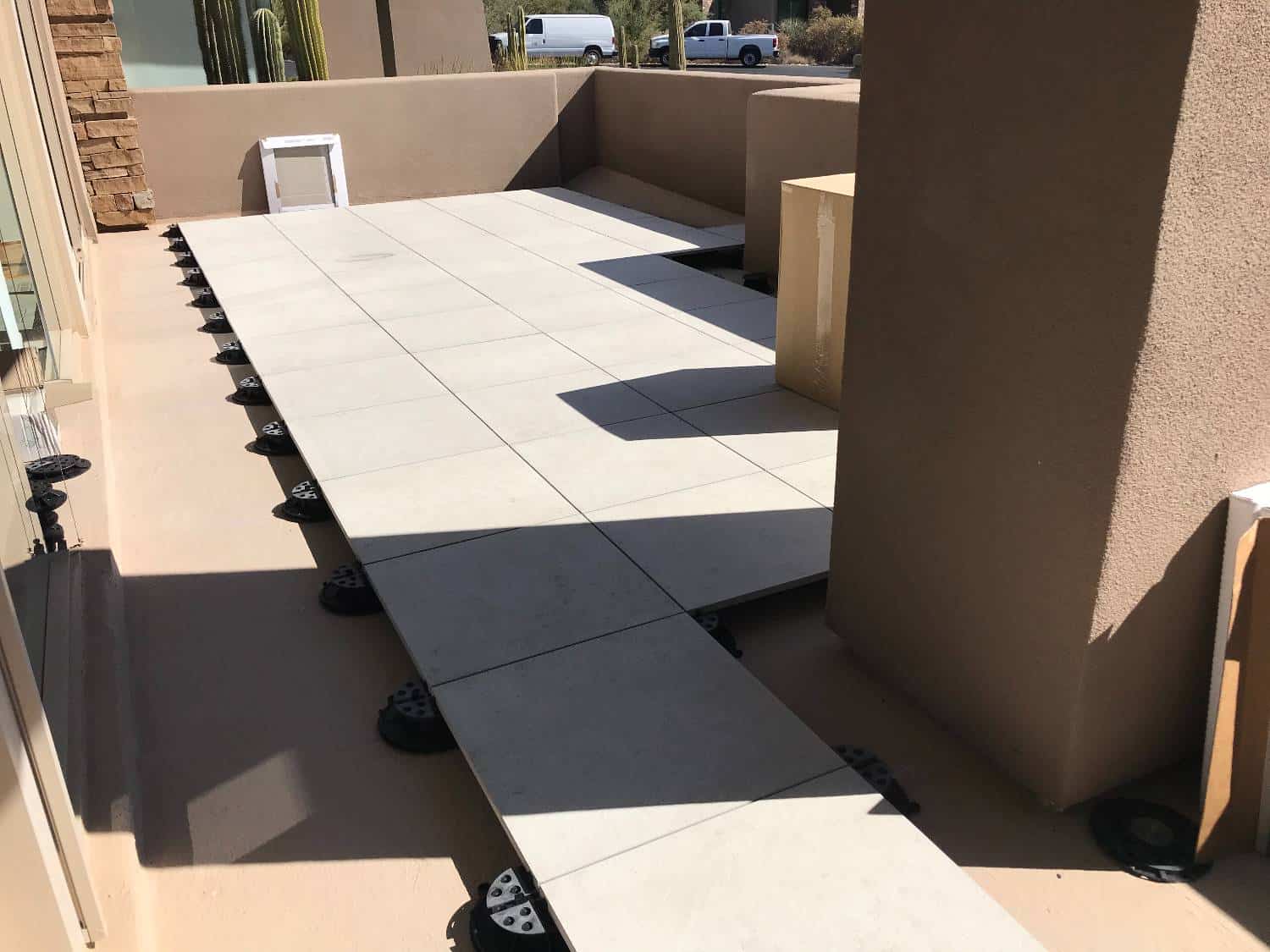
Choosing the Right Deck Support System
Different surfaces and applications call for different support systems:
- Aluminum joists for framed decking
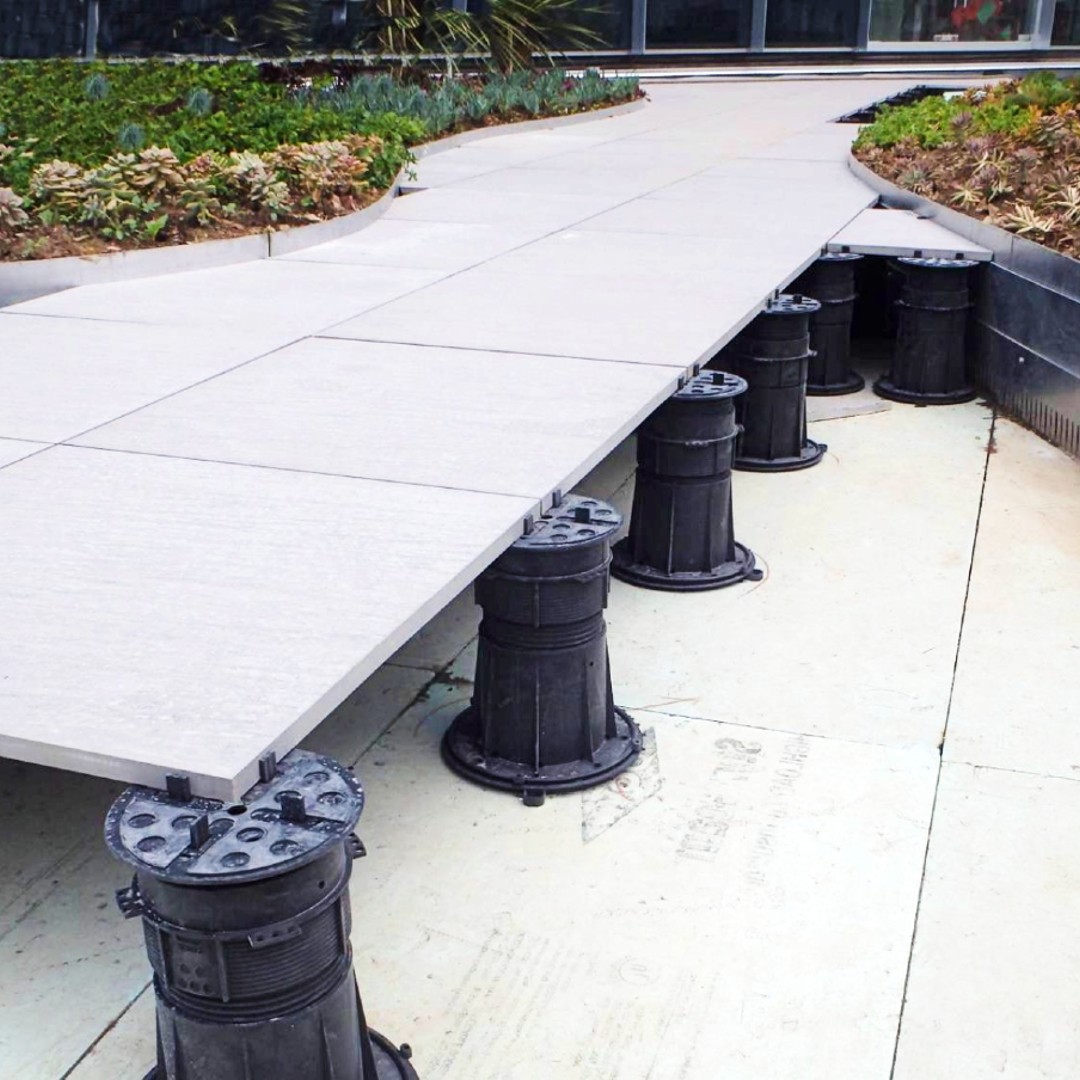
- Buzon adjustable pedestals for elevated, pedestal-supported decks
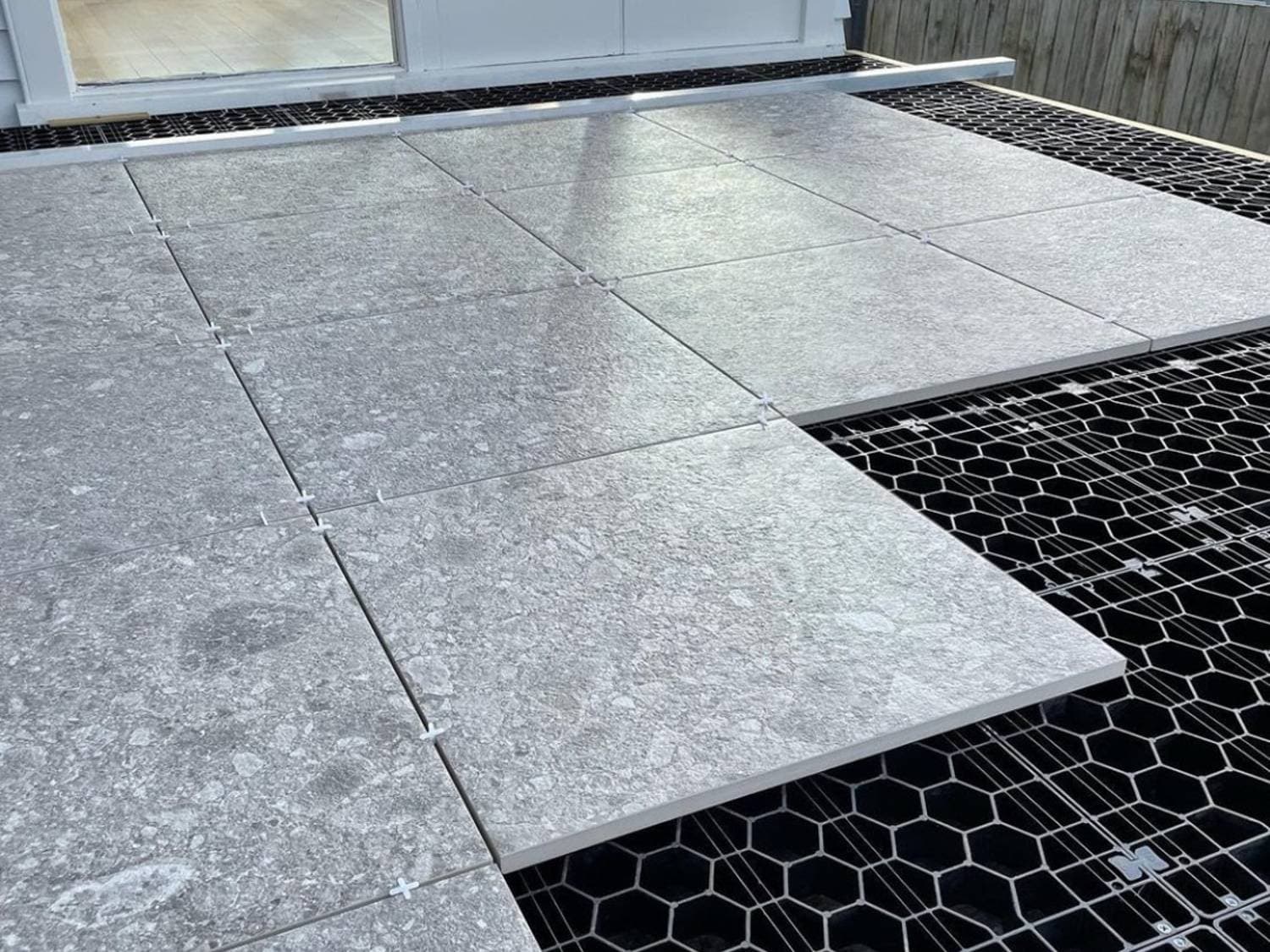
- Silca Grates for elevated stone, porcelain, and paver decking

Aluminum Joist Systems for Durable Decking
The framing system is an important part of any decking assembly. Materials such as Novano composite, Thermally Modified Ash, or Black Locust Decking can provide a durable, low-maintenance finished surface, but the framing beneath it should be selected with the same performance expectations in mind.
Aluminum joists offer several advantages for outdoor decking applications:
- Resistance to moisture and rot
- Long service life
- Dimensional stability
- Reduced maintenance concerns compared with conventional wood framing
- Compatibility with composite decking and other outdoor surfaces
For projects where the finished decking is expected to provide long-term performance, the framing should support those same expectations.
The surface and the structure should be designed as one deck system.
Buzon Pedestal Systems for Elevated Decks
For rooftop terraces, balconies, plazas, and other elevated outdoor spaces, the support system becomes an even more important part of the design.
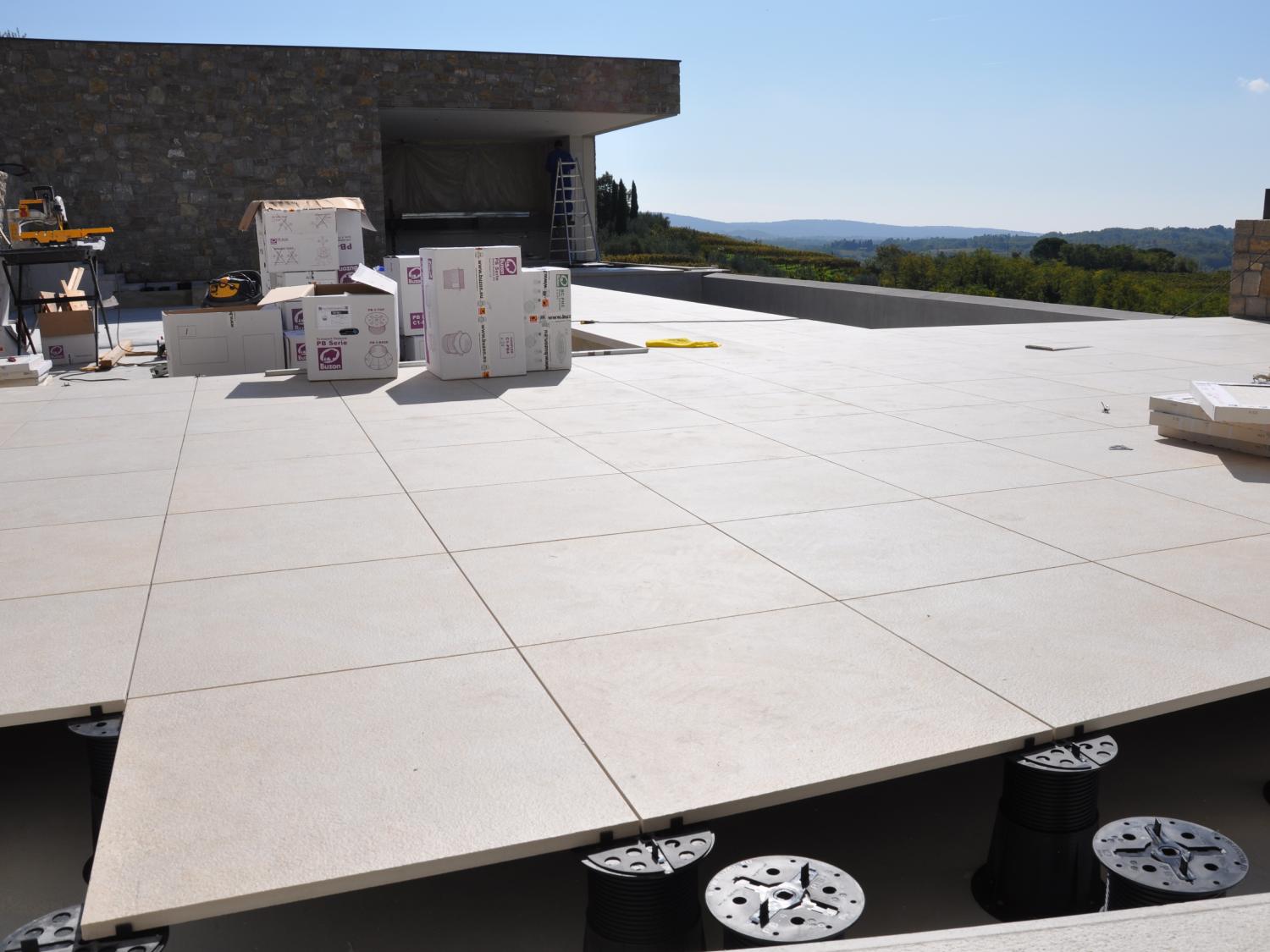
Buzon adjustable pedestals create a raised platform for pavers, stone, porcelain, and other deck surfaces.
A pedestal-supported deck system can provide:
- Adjustable elevation
- Precise leveling
- Space for drainage and services beneath the finished surface
- Access to the substrate for maintenance
- Support for pavers, stone, and other deck surfaces
- Flexibility around uneven substrates, obstacles, and existing conditions
This approach can be especially useful when the finished surface needs to remain level while accommodating drainage, slope, or conditions below the deck system.
Stone Decking Doesn’t Have to Mean a Massive Structure
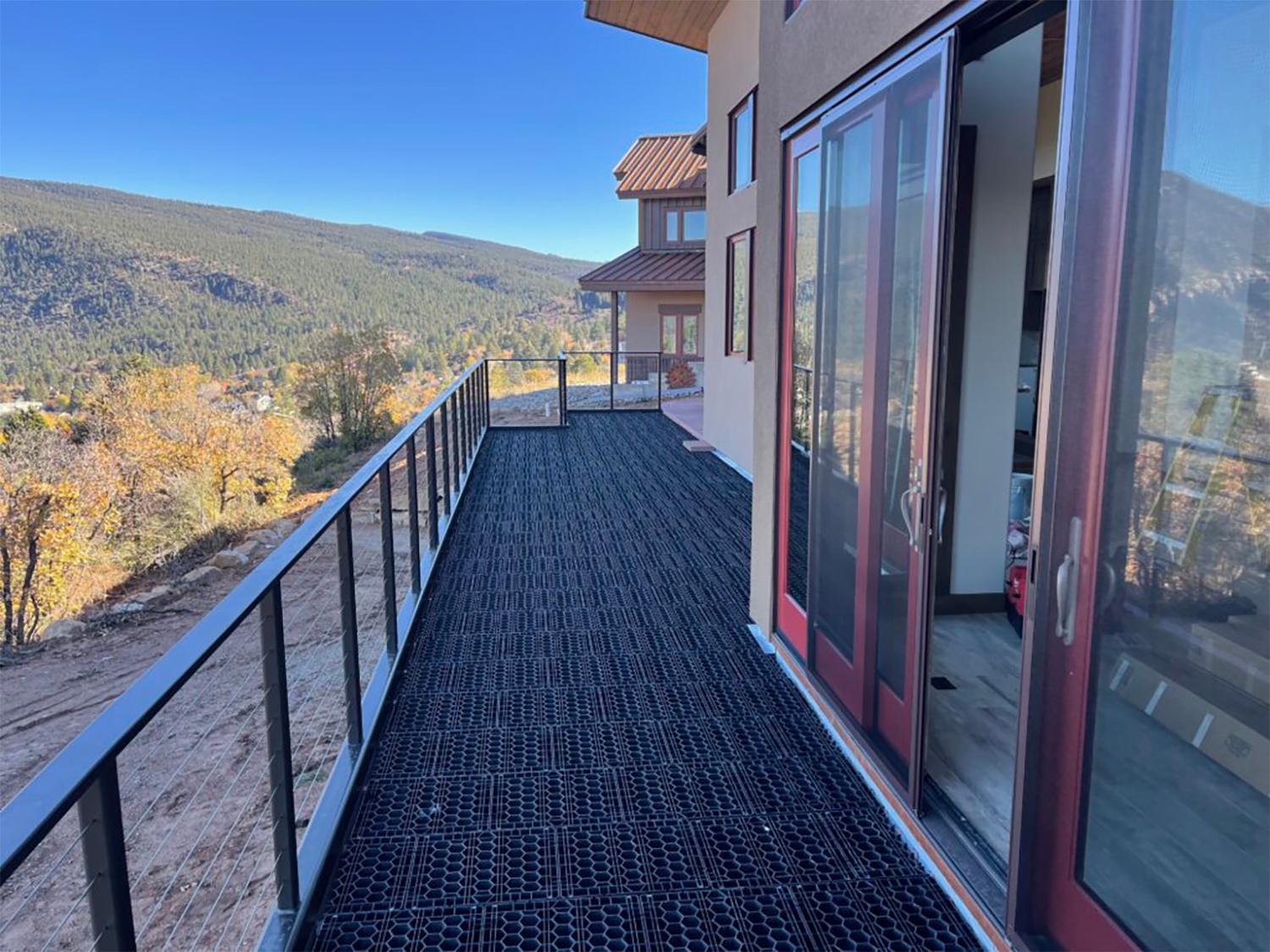
Traditional stone or paver decks can create significant structural and installation challenges. Silca Grates offer another approach, allowing stone, porcelain, and concrete surfaces to be installed over traditional wood joist framing.
HDG Silca Grates are structural panels designed to create a supporting surface above wood joists. The 2-square-foot panels are designed for joists spaced 16 inches on center, providing a foundation for a range of finished surfaces.
Originally developed for residential decks, Silca Grates are also used in commercial applications. They can support applications ranging from stone and concrete pavers to porcelain surfaces, synthetic turf, and modular paver systems.
The result is an elevated deck assembly that can deliver the appearance and durability of a masonry surface without requiring a conventional masonry structure.
Specify the Assembly, Not Just the Finish
The most successful outdoor spaces are designed as complete deck systems, with the surface, support, structure, and site conditions working together.
The surface determines what people see and experience. The structure beneath it determines how that surface is supported, how water moves through the assembly, how the system responds to the environment, and how the space can be accessed and maintained over time.
Choosing the right deck system means looking beyond the finished surface to the structure, drainage, and support requirements that influence long-term performance.
Three Deck Support Systems Compared

01 / FRAMED DECKING
Wood or composite decking + aluminum joists
Design considerations: Joist spacing, fastening, structural capacity, drainage, material movement, and compatibility with the decking profile.
Applications: Composite decking, thermally modified wood, and other compatible board decking products.
02 / PEDESTAL-SUPPORTED SURFACES
Porcelain or pavers + Buzon pedestals
Design considerations: Pedestal layout, height, load requirements, slope, edge conditions, drainage, paver protection, and access to the underlying surface.
Applications: Elevated porcelain pavers, natural stone, and compatible concrete pavers on suitable substrates.
03 / ELEVATED HARDSCAPE OVER JOISTS
Stone or porcelain + HDG Silca Grates
Design considerations: Joist spacing, structural capacity, grate compatibility, drainage, and surface material requirements.
Applications: Elevated stone, porcelain, and paver surfaces over compatible wood-framed structures.
Find the Right Support System
Planning a deck, rooftop terrace, or elevated outdoor space? HDG Building Materials can help you identify the right support system for the surface, application, structure, and project requirements.
Call 503.360.9551, email sales@hdgbuildingmaterials.com, or connect with our team.