Porcelain Pavers vs. Stone
Porcelain pavers vs. stone is about more than which material looks better. Porcelain does more than just mimic stone. It can reproduce the appearance of materials that may be difficult to use outdoors, inconsistent in performance, expensive to fabricate, or simply less practical in certain applications.
This article explores where porcelain can outperform the natural materials it mimics—including stone, wood, concrete, and terrazzo—and where natural stone remains the better choice.
For a broader comparison of the two materials, see Porcelain Pavers vs. Natural Stone: Which Is Right for Your Project?
When You Want the Look, Not the Material
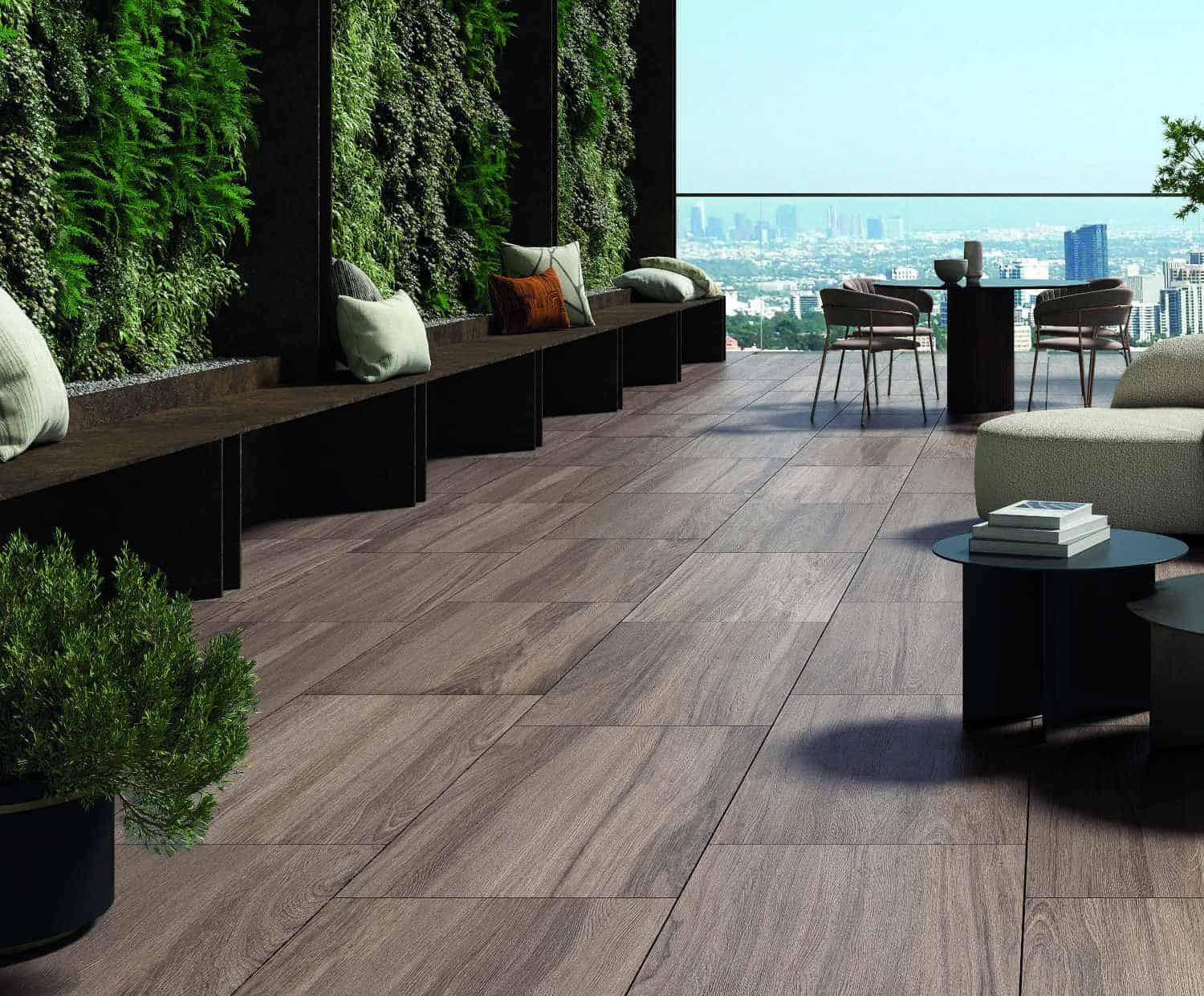
Wood Without the Wood
Get the warmth and visual character of wood without many of the maintenance concerns associated with outdoor wood. Porcelain wood-look pavers resist weathering, splintering, staining, and biological buildup, and they offer a durable alternative where fire resistance is an important consideration.
Concrete Without the Concrete
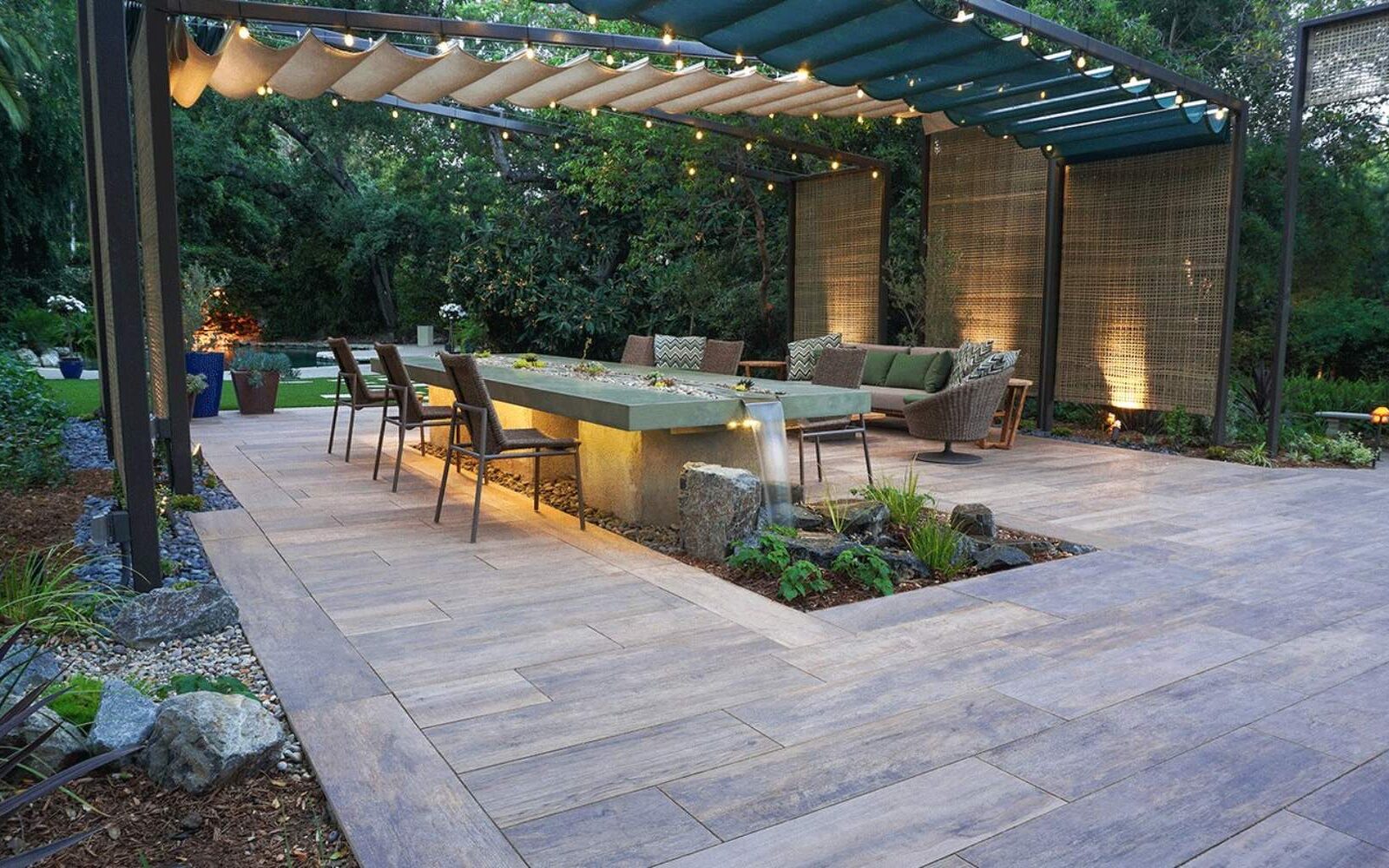
Get the clean, architectural aesthetic of concrete with the technical performance of porcelain. Porcelain can offer:
- Lower weight than many concrete paving materials
- Very low water absorption
- Color stability with strong resistance to fading
- Resistance to staining
- Low-maintenance performance in outdoor environments
Terrazzo Without the Terrazzo System
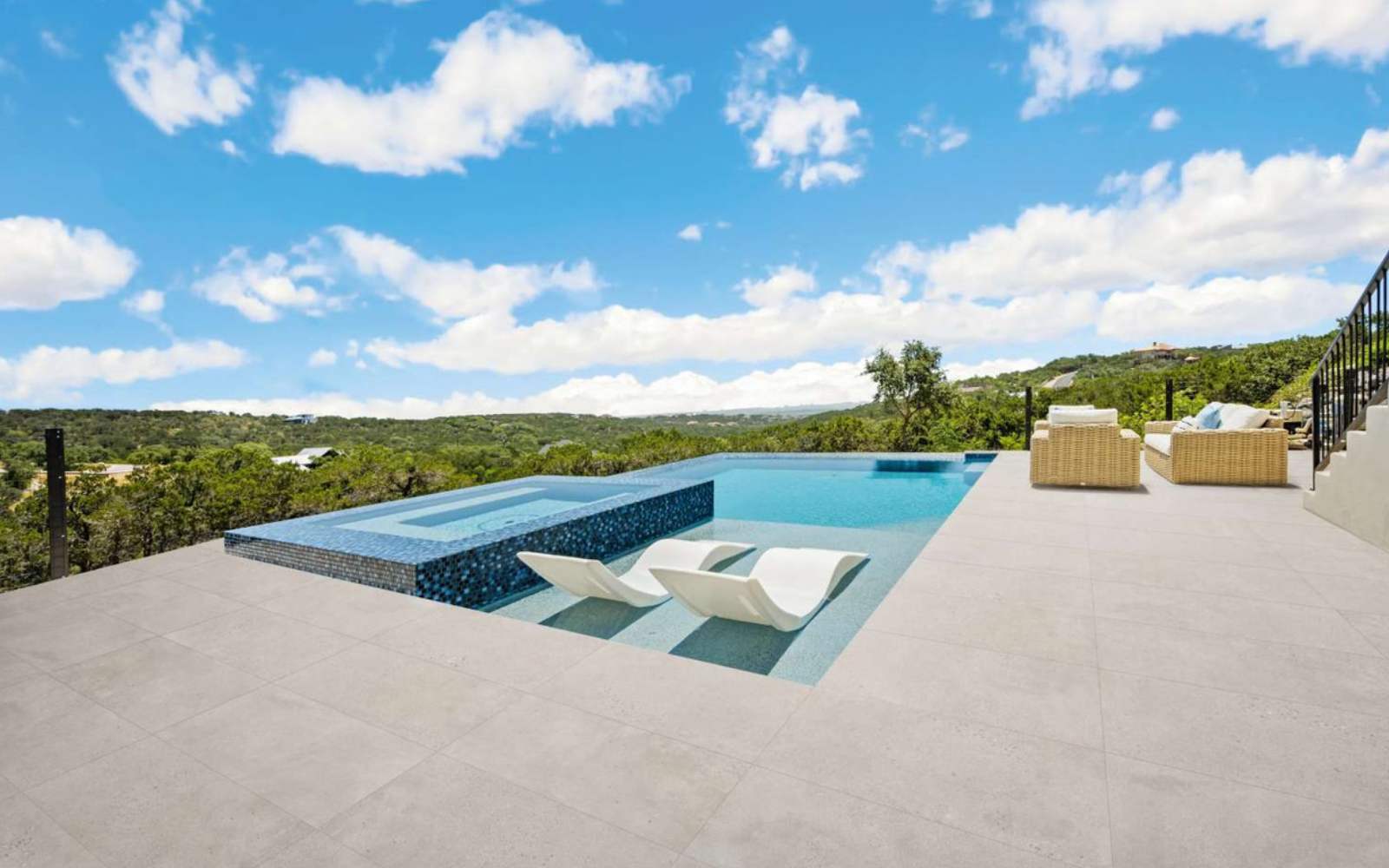
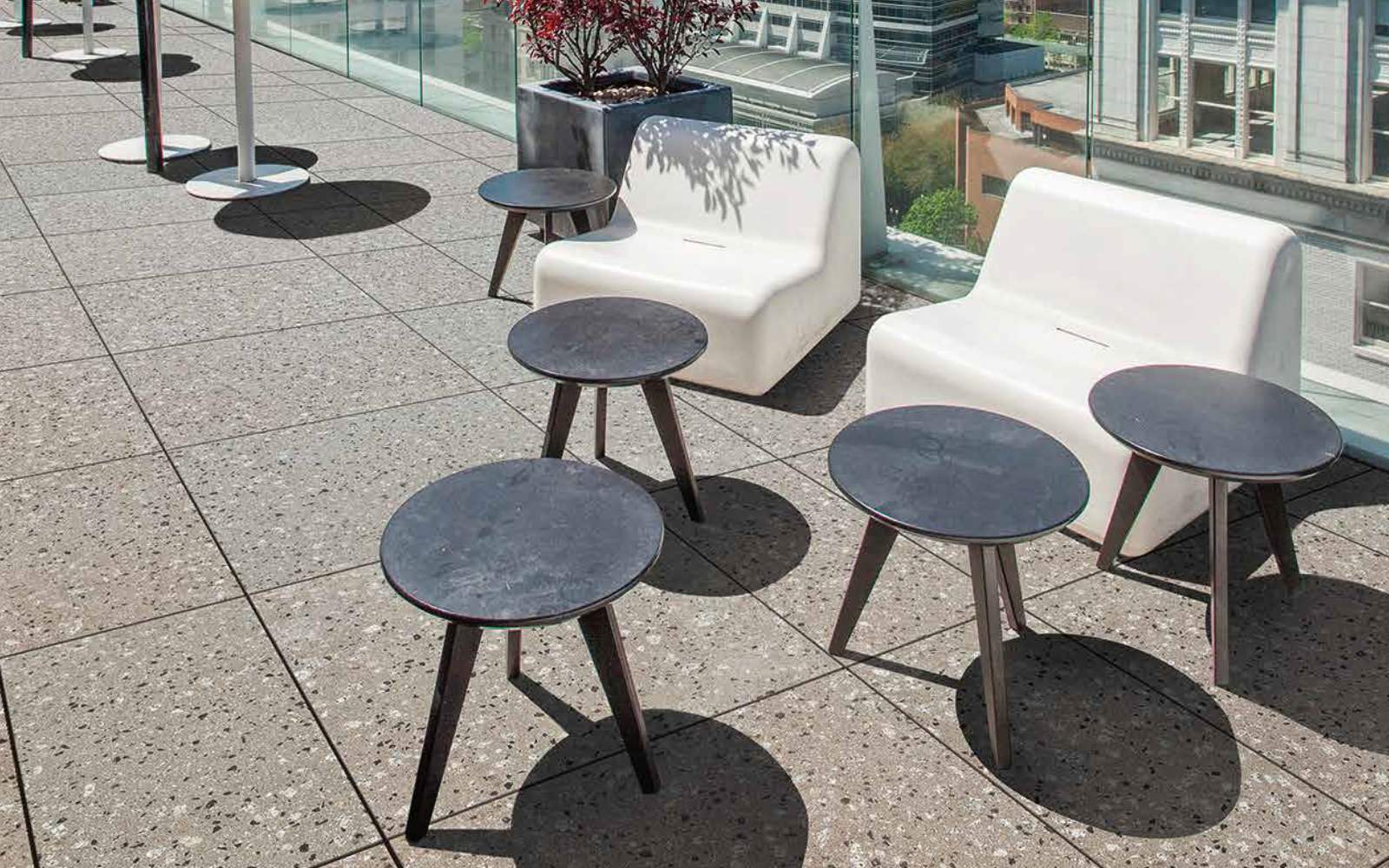
Get the visual complexity of terrazzo without installing a cement- or epoxy-based terrazzo system. Terrazzo-look porcelain pavers can be a more economical alternative to a traditional poured terrazzo system. Porcelain pavers are also weather-resistant, don’t require sealing, and are thinner and lighter than many traditional terrazzo systems. These characteristics can be especially advantageous for pedestal-set applications.
Stone Without Some of the Stone’s Limitations
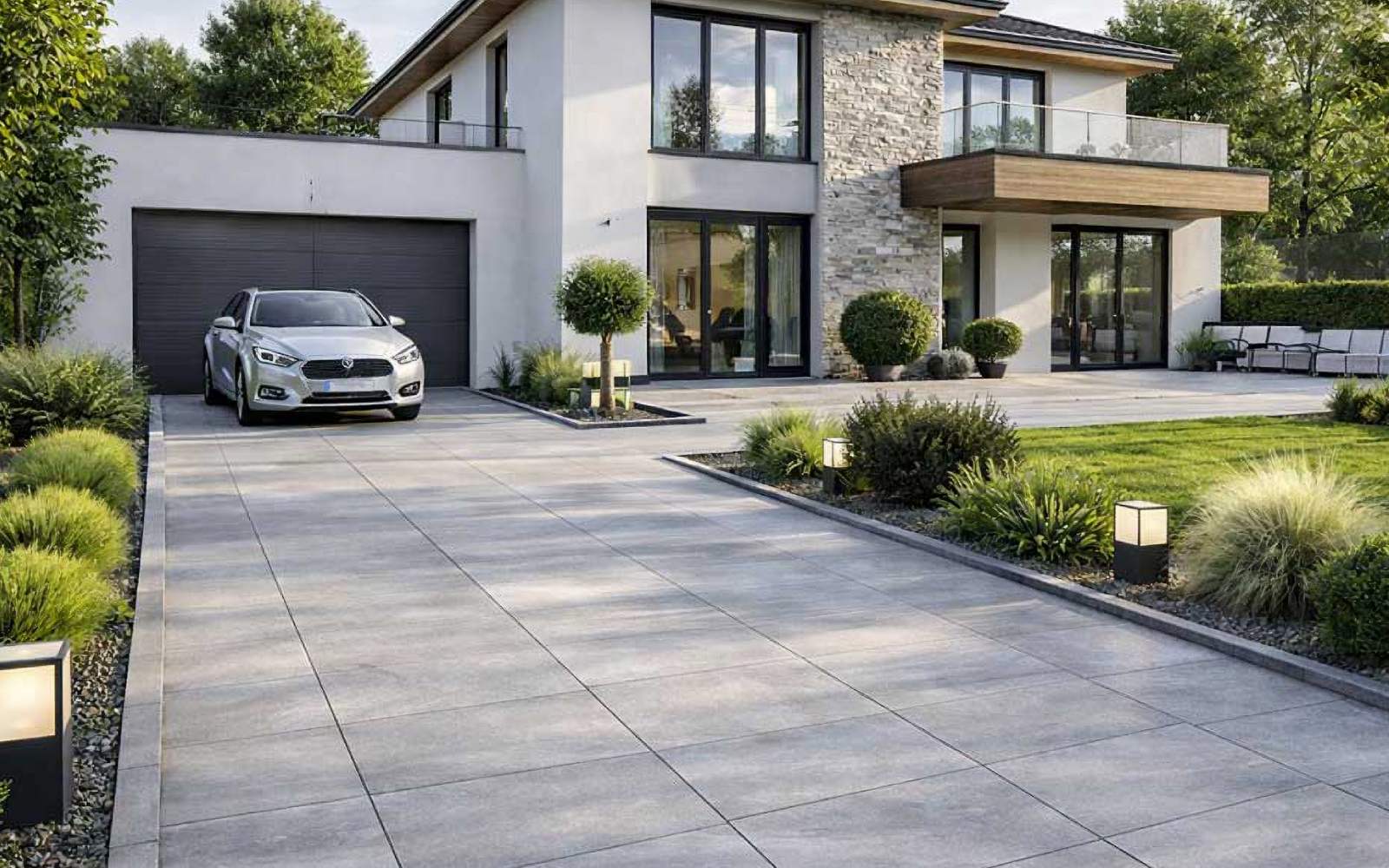
Porcelain can reproduce the appearance of natural stones such as marble, travertine, sandstone, slate, limestone, and granite, while offering the consistency and technical characteristics of a manufactured material. Depending on the application, those characteristics can include very low water absorption, resistance to staining and fading, and predictable dimensions and thickness.
For certain stones and environments, those differences can be significant. A porcelain paver can deliver the desired natural-stone aesthetic while avoiding some of the porosity, variability, maintenance, or structural limitations associated with the natural material it mimics.
Beyond the Look: Where Porcelain Has the Advantage
Low-Profile Installations: A Porcelain Advantage
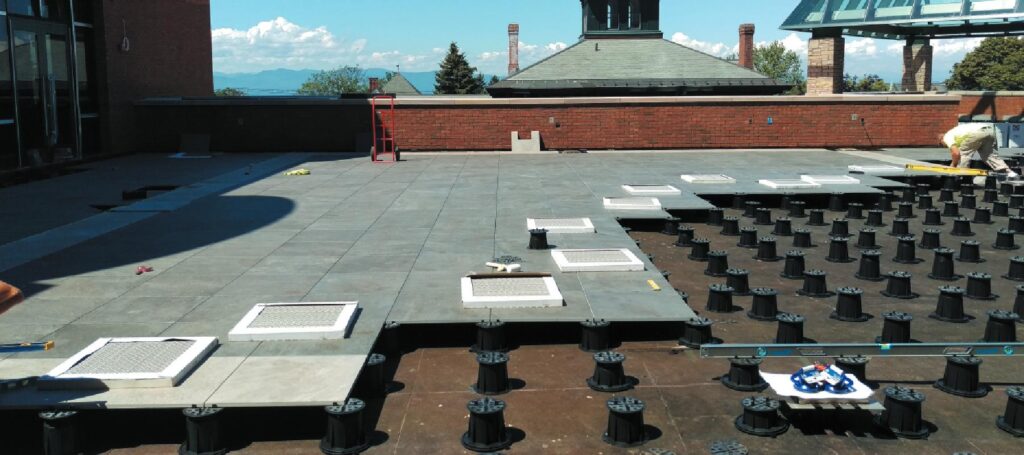
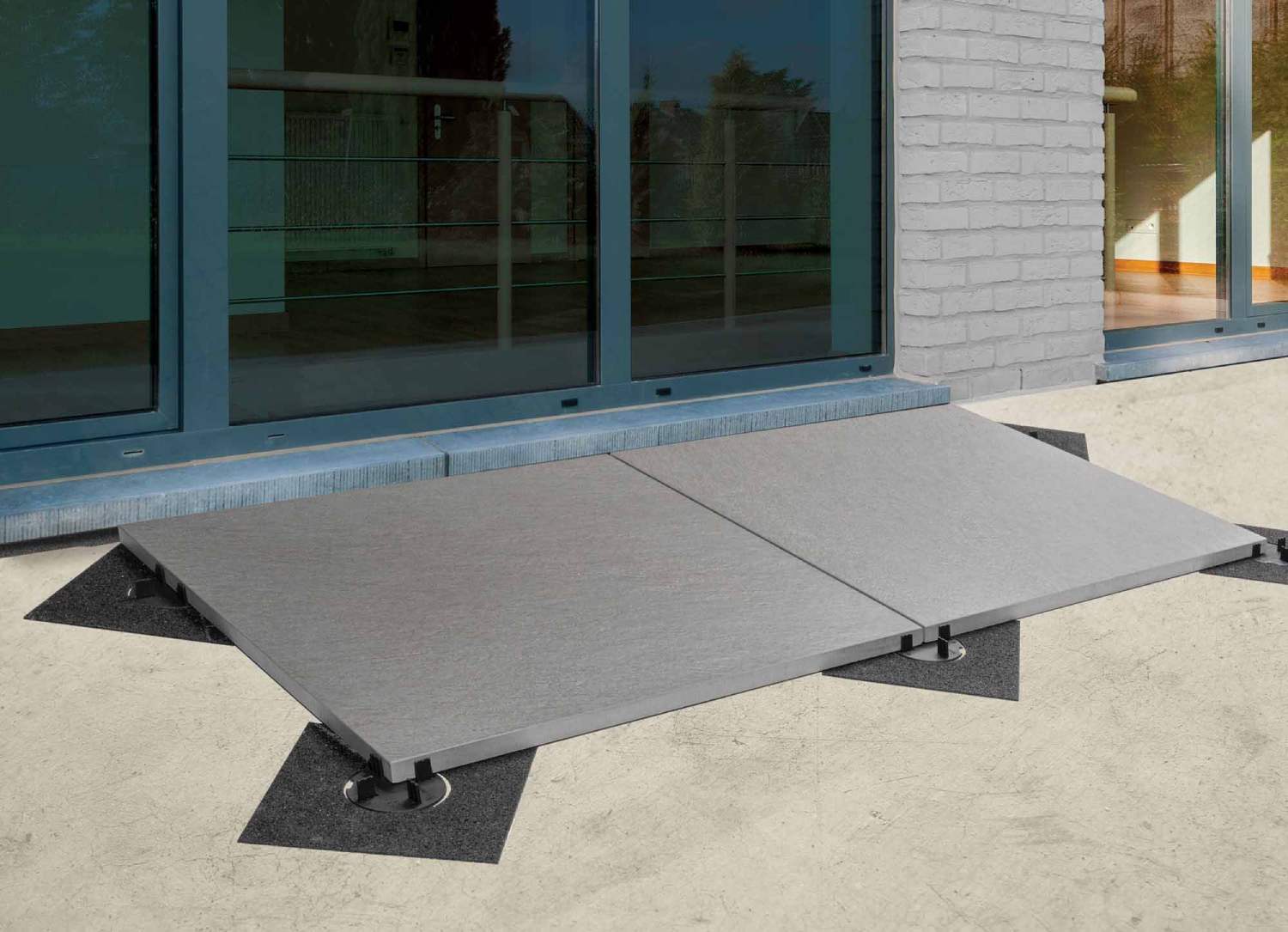
Rooftop decks and terraces often have limited available height near door thresholds, ridge lines, and the tops of crickets. In these situations, minimizing the total height of the pedestal-paver system can be critical.
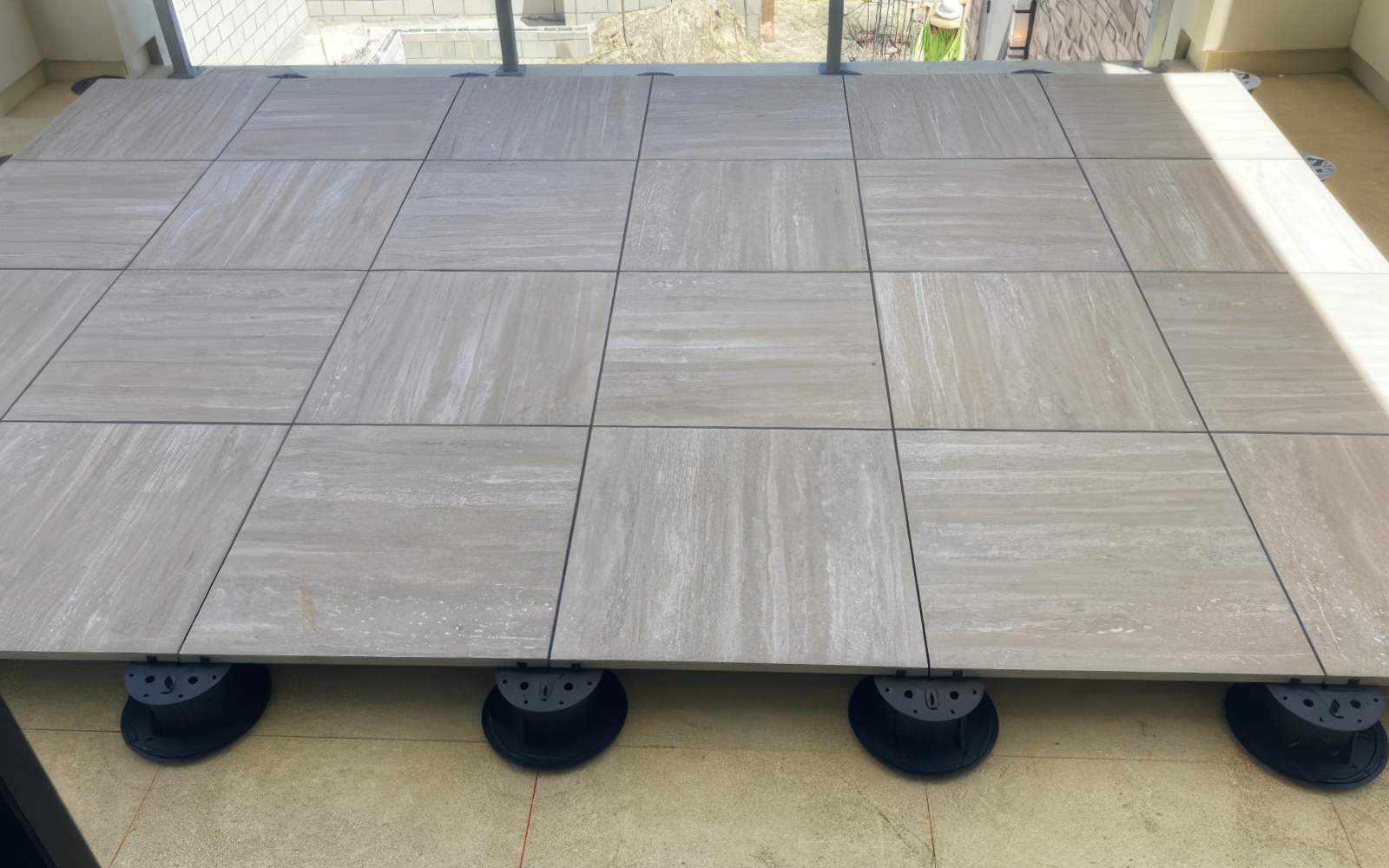
¾-inch structural porcelain pavers combined with Buzon U-Tabs-Flat and U-Pads-Ground can create installations starting at approximately 7/8 inch total system height. Even on taller adjustable pedestals, the thinner profile of porcelain provides an advantage where available height is limited.
For more information, see Buzon’s guide to Low-Profile Pedestal Solutions for Navigating Tight Spaces.
Lower Weight: A Rooftop Advantage
Porcelain pavers weigh substantially less than comparable stone or concrete pavers, making weight an important consideration for rooftop and elevated installations.
Reducing dead load can potentially reduce structural requirements and may make it possible to retrofit an existing building with a rooftop terrace where additional weight is a concern. The lighter weight also makes porcelain easier to handle and install on elevated projects.
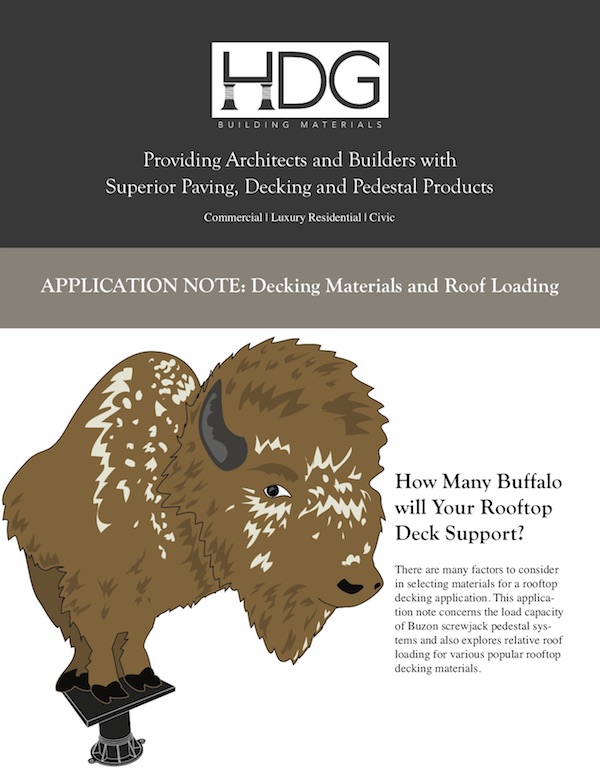
Learn more in our application note: Decking Materials and Roof Loading.
For projects where porcelain pavers are being installed on taller pedestals, HDG Paver Defense Solutions can provide additional protection against falls through the raised floor in the event of paver breakage.
The Structural Surprise: Not All Stone Is Created Equal
Not every natural stone is equally suited to direct pedestal-set applications. Some stones may lack sufficient strength or density, while others contain natural fissures or structurally weak veining that can be difficult to identify during fabrication. These characteristics can make certain stones poor candidates for direct pedestal support.
HDG can accommodate these materials in elevated applications using HDG Grating Panels, which provide continuous support beneath the stone. By contrast, appropriately specified porcelain pavers are manufactured to consistent structural specifications and may be suitable for direct pedestal-set applications.
Where Stone Still Wins
Despite the many advantages of porcelain pavers, natural stone remains the better choice for some applications. Stone can offer advantages in:
- Impact resistance, especially with appropriate thickness and stone selection
- Thicker structural sections for demanding applications
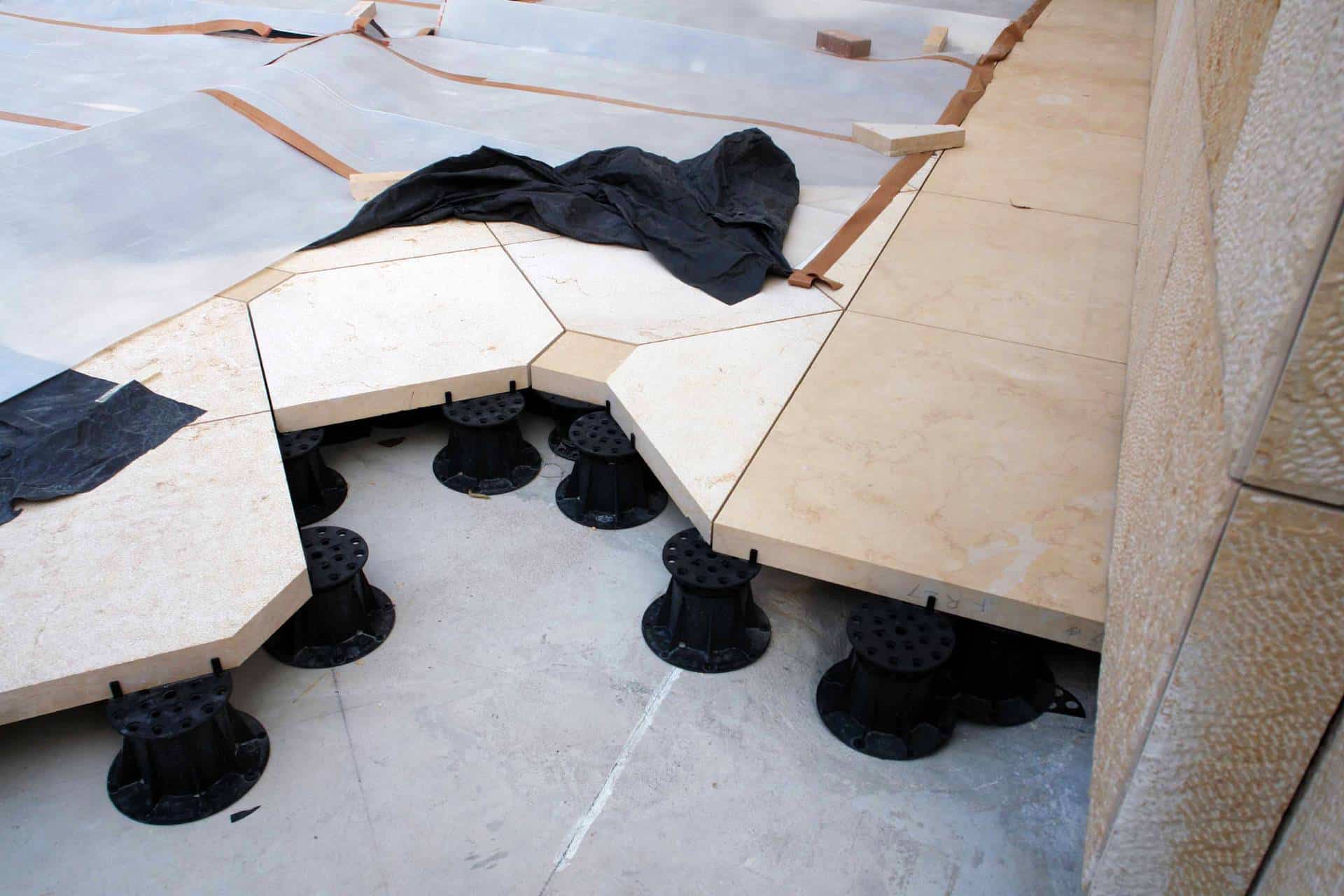
- Highly customized fabrication, including unusual shapes and dimensions
- Pool coping, wall caps, and stair treads
- Complex architectural details and inlays
- Natural aging and patina
HDG’s current U-TOP-FLEX solution provides a flexible interface for elevated natural stone installations and can accommodate virtually any stone shape—from hexagonal, triangular, and octagonal pieces to complex curvilinear designs.
For a broader comparison, see: Porcelain Pavers vs. Natural Stone: Which Is Right for Your Project?
Not Sure Which Material Is Right?
HDG Building Materials can help you evaluate the materials, installation methods, and performance requirements for your specific project.