Which Material Is Best for Your Project?
Choosing between porcelain pavers and natural stone isn’t a question of which material is better. When comparing porcelain pavers vs. natural stone, the better choice depends on the project. Both can deliver exceptional durability, design flexibility, and long-term performance. But they behave differently in different environments. Weight, installation method, maintenance, customization, aesthetics, budget, and intended use can all influence which material is best for a given project.
Design Considerations: Natural Stone vs. Porcelain Pavers
| Consideration | Natural Stone | Porcelain Pavers |
|---|---|---|
| Appearance & Design Aesthetic | Authentic variation in color, veining, texture, and character | Consistent appearance with a wide range of stone- and wood-inspired looks |
| Design Flexibility | Highly flexible in size, shape, thickness, and fabrication | Broad range of standard sizes, colors, patterns, finishes, and textures |
| Architectural Details | Excellent flexibility for coping, wall caps, stair treads, and custom profiles | Selected HDG series support finished edges, nosing, bullnose, L-corners, thickened edges, and other details |
| Application | At-grade and elevated applications, including plazas, courtyards, driveways, and public spaces | At-grade and elevated applications, including rooftops, terraces, balconies, and pool decks |
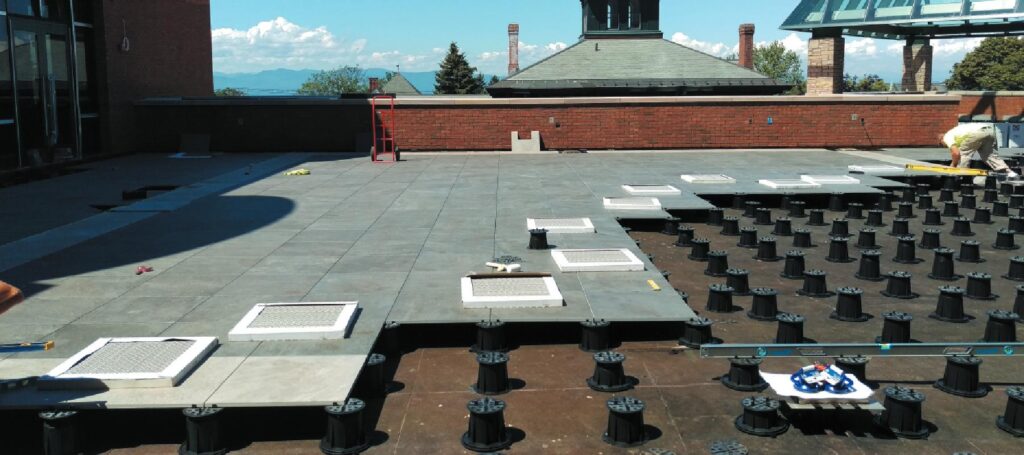
| Weight | Heavier; structural requirements may be significant for elevated applications | Lighter; well suited to elevated installations and pedestal systems |
| Maintenance | Varies by stone; some require sealing and more frequent maintenance | Low maintenance; highly resistant to water absorption, staining, fading, and biological buildup |
| Installation | Traditional paving methods and specialized elevated systems | Traditional paving methods, pedestal systems, and specialized elevated systems |
1. Appearance & Design Aesthetic
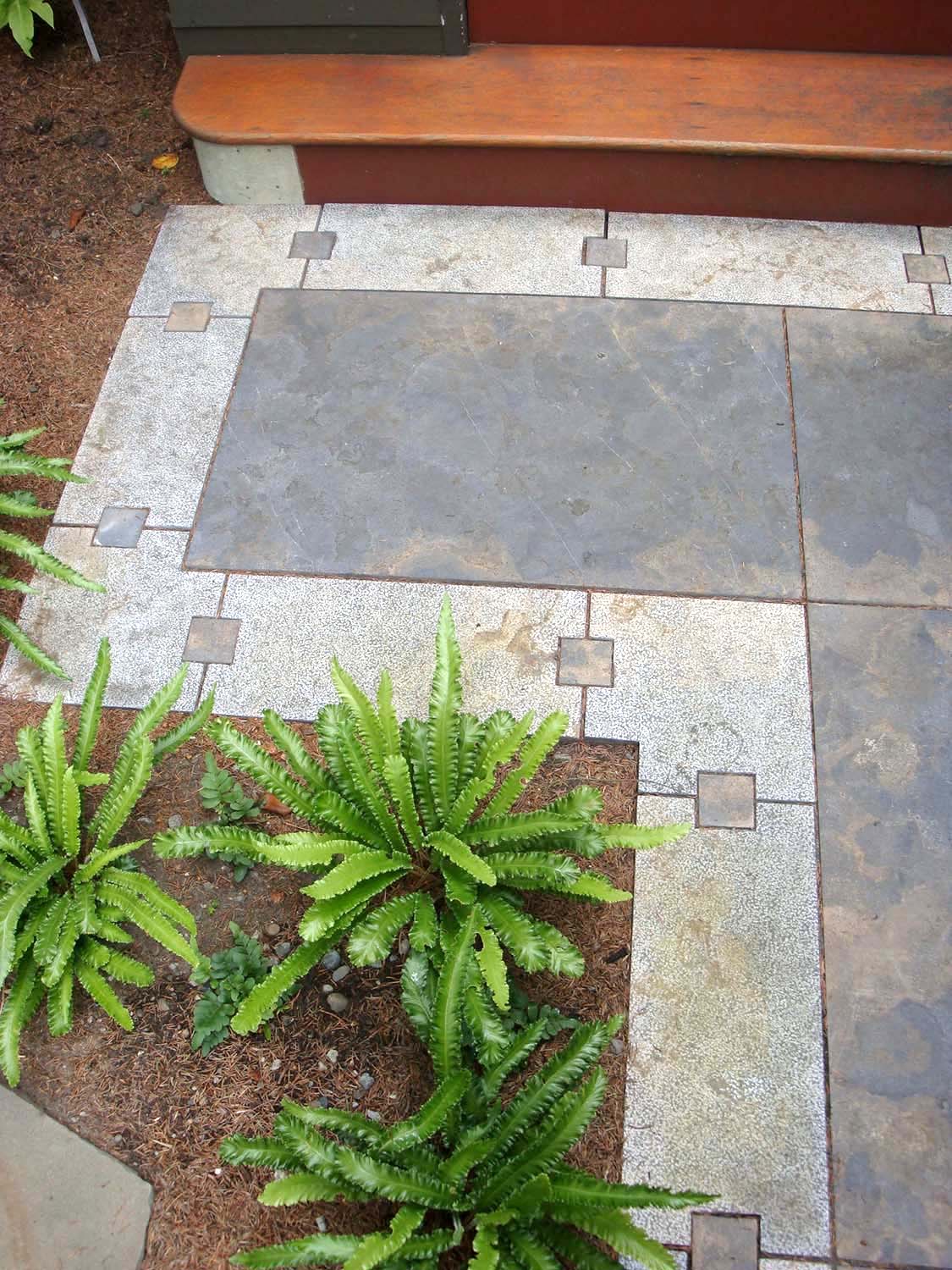
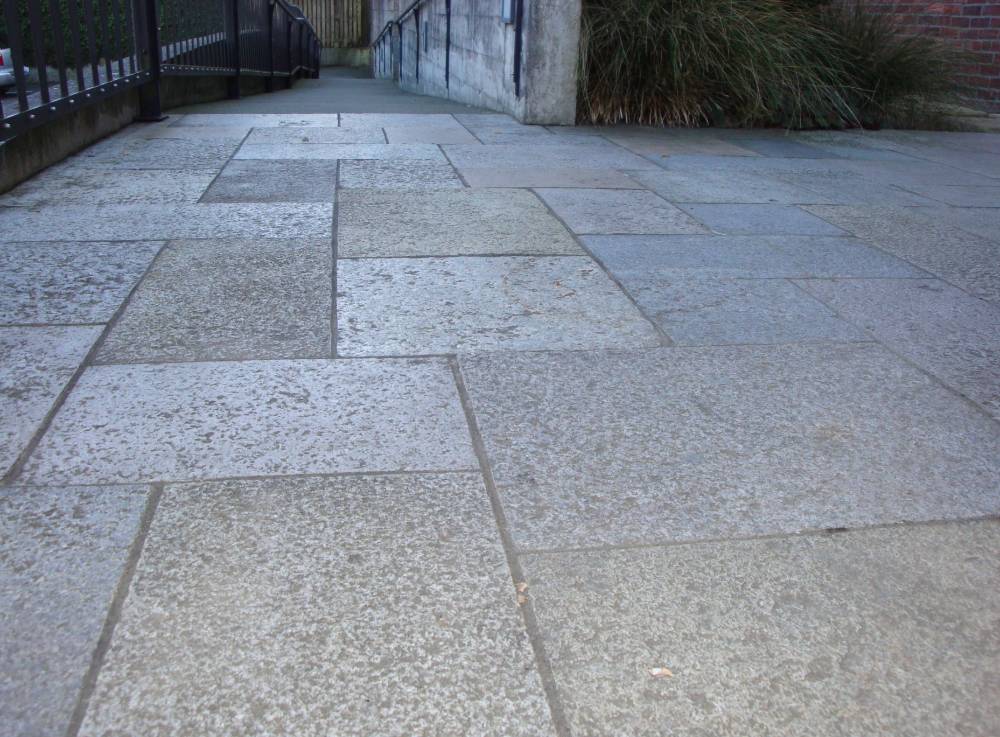
Natural stone provides authentic variation in color, veining, texture, and grain, giving each installation a distinctive appearance.
Natural stone pavers are available in a wide range of colors, including gray, black, yellow, red, and more. Surface finishes range from smooth and honed to textured finishes such as sandblasted and flamed. Pavers can also be fabricated in a broad range of sizes, providing flexibility for custom designs.
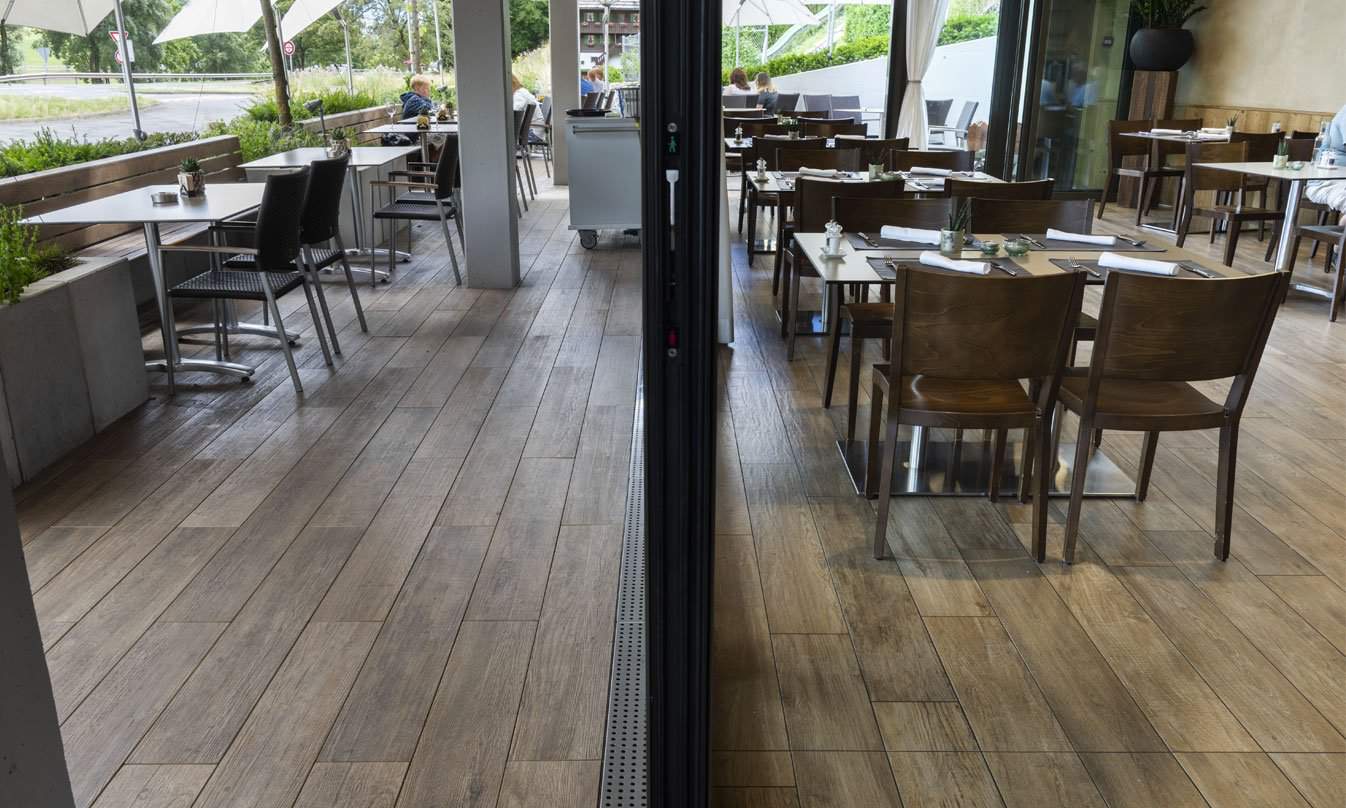
Porcelain pavers provide a more consistent appearance with a wide range of stone- and wood-inspired looks. Pietra stone-look porcelain pavers emulate the appearance of granite, basalt, travertine, slate, limestone, bluestone, and concrete, while Legno wood-look pavers recreate the appearance of pine, oak, ash, driftwood, walnut, teak, and more.
Stone- and wood-look porcelain pavers are available with V1–V4 color variation ratings, helping designers select a look appropriate to the project.
2. Design Flexibility: Size, Shape & Fabrication
Natural stone offers exceptional fabrication flexibility. It can be specified in different thicknesses and fabricated into standard or custom sizes, irregular shapes, curves, large-format pieces, inlays, and other details. Digital fabrication can translate complex designs into precisely cut and labeled pieces, helping maintain the designer’s intent through installation.
Porcelain pavers are manufactured in standardized sizes and thicknesses, providing consistency and predictable installation. Common formats include 24 × 24 inches (60 × 60 cm) and 24 × 48 inches (60 × 120 cm), with additional sizes available depending on the product. Pavers can also be cut and arranged in different patterns to create custom layouts.
3. Architectural Details: Edges, Coping & Transitions
Natural stone offers extensive flexibility for architectural details such as coping, wall caps, stair treads, bullnose edges, and custom profiles. These elements can be fabricated from the same stone as the surrounding paving to create cohesive transitions between horizontal and vertical surfaces.
Porcelain pavers have traditionally been more limited in this area, but specialized fabrication has expanded the possibilities. Selected HDG series and colors, e.g. Mod Clay, are available with finished side faces, nosing, bullnose edges, L-corners, and thickened edges. Recessed grooves for applications such as strip lighting and drip edges are also available in certain configurations.
These porcelain details can be more challenging and expensive to produce than comparable details in natural stone, and availability varies by series and color. Natural stone remains the more flexible choice for highly customized coping, wall caps, stair treads, and complex architectural profiles.
4. Application
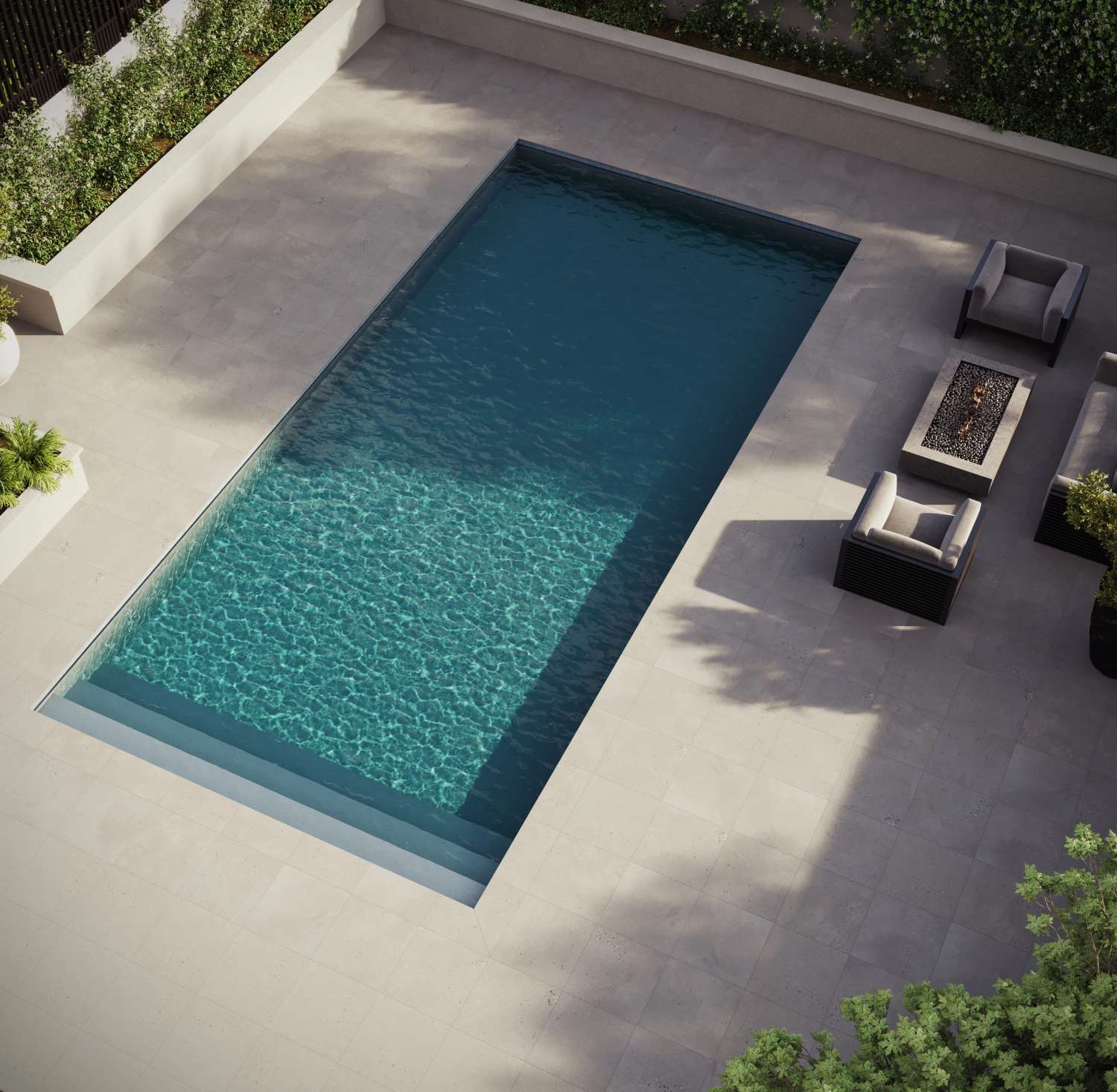
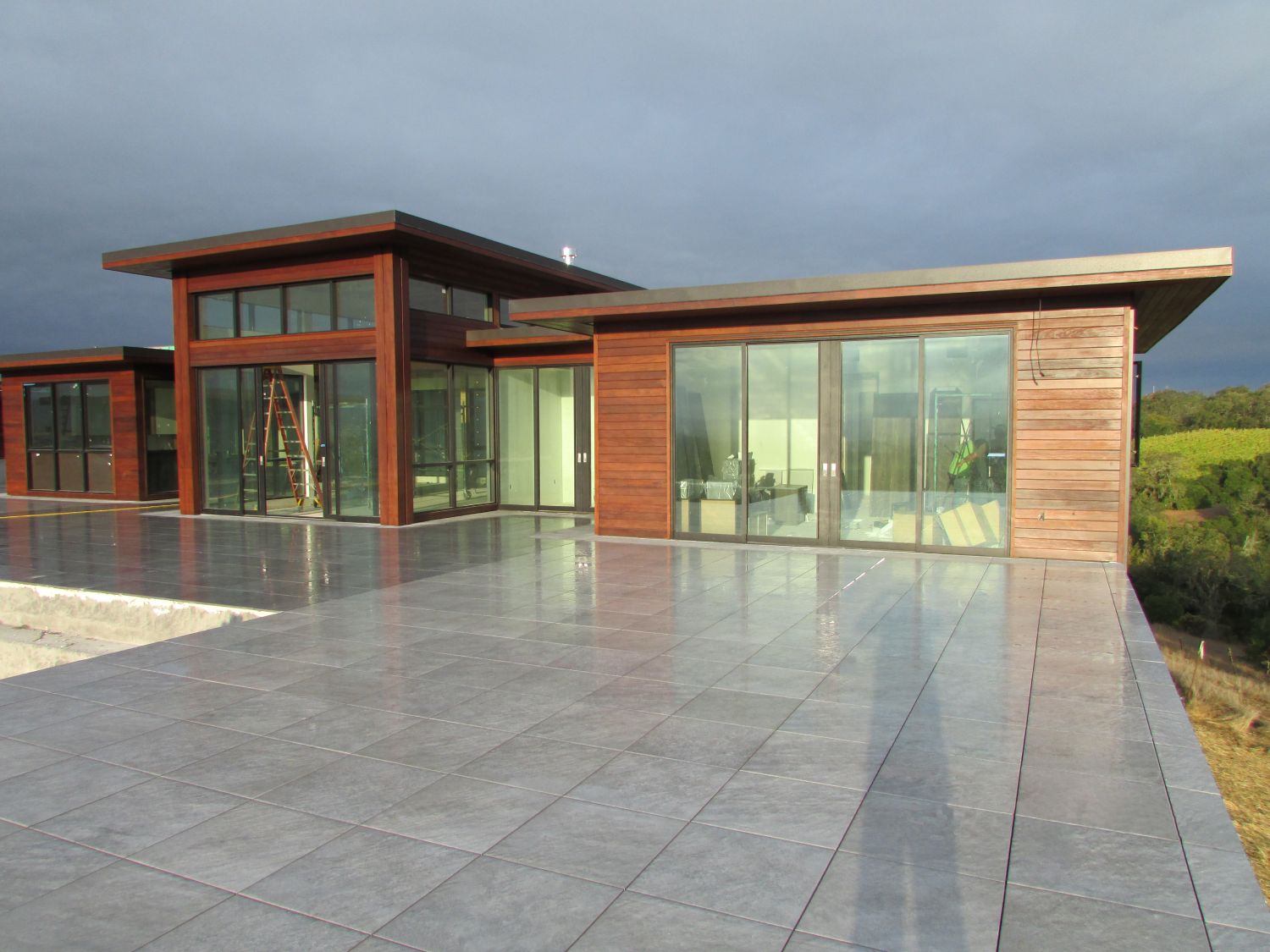
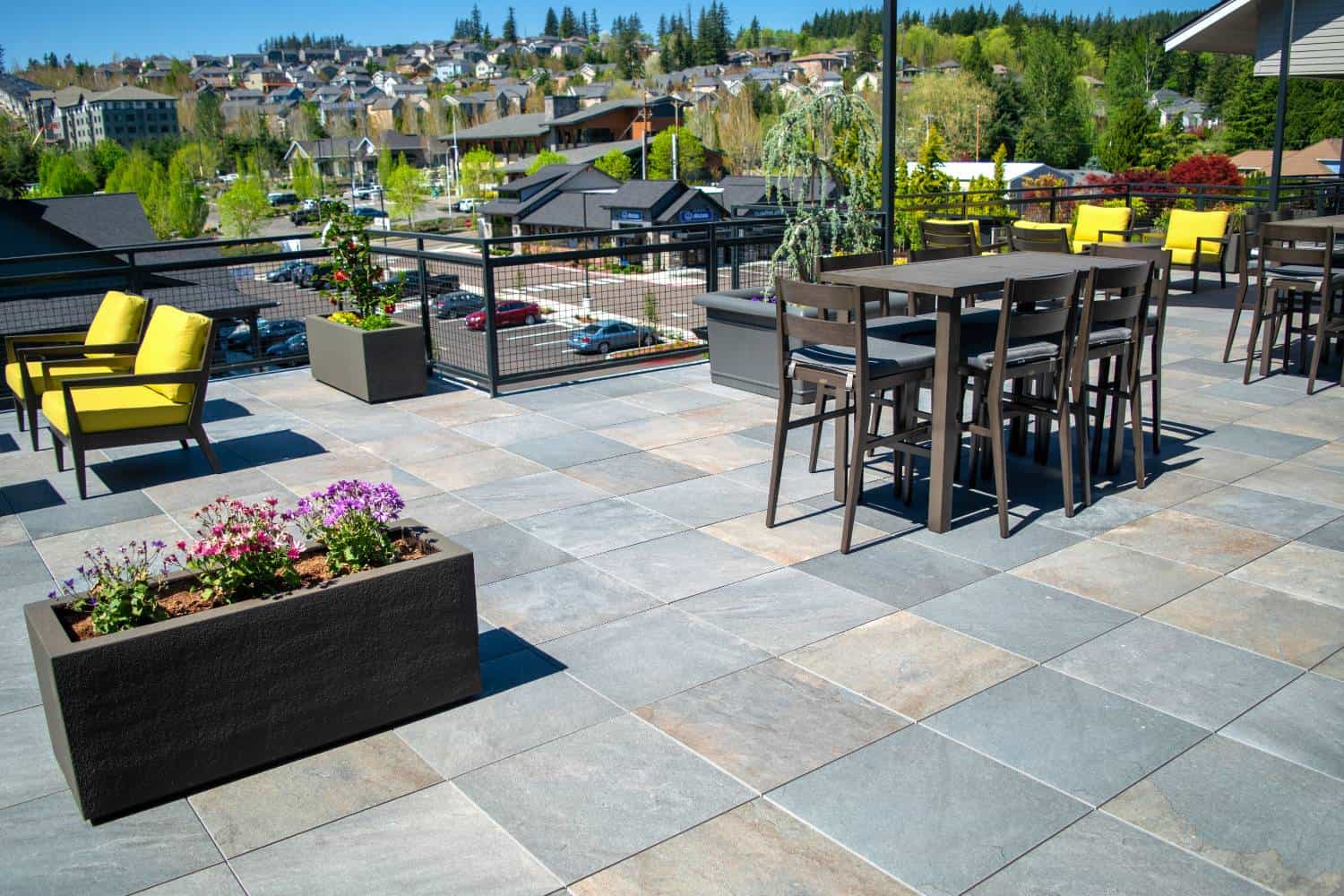
Both porcelain and natural stone pavers can be installed at grade for plazas, courtyards, driveways, stairways, pool decks, and public spaces. With appropriate structural support and an installation system suited to the application, either material can also be used for elevated installations, including rooftops, terraces, and balconies.
Natural stone is well suited to high-traffic applications, including driveways, parking areas, and roads, when the appropriate stone, thickness, and installation method are specified. Its ability to be fabricated in a wide range of thicknesses and dimensions also makes it adaptable to demanding applications.
Porcelain pavers are particularly well suited to high-traffic pedestrian applications. Outdoor-rated porcelain pavers are available in thicknesses including 20mm (¾”) and 30mm (approximately 1¼”), and can be used for cafés, courtyards, hospitality areas, pedestrian plazas, rooftops, and promenades.
5. Weight: Thickness & Load Requirements
Natural stone pavers are generally heavier than porcelain pavers, and their weight can be a significant consideration for elevated applications. Porcelain pavers offer a lighter-weight alternative that is well suited to rooftops, terraces, balconies, and pedestal-supported installations.
Thickness and installation method matter when evaluating load requirements. Natural stone pavers specified at the appropriate thickness can accommodate vehicular traffic and are used for driveways, parking areas, and roads. 3 cm porcelain pavers are also available for drive-over applications at grade, when properly specified and installed.
For elevated pedestal-set applications, pedestal manufacturers generally do not recommend using either natural stone or porcelain pavers where vehicles will impose static or dynamic loads. The appropriate paver thickness, support spacing, substrate, and installation system should always be determined based on the project’s specific loading requirements.

6. Maintenance
Natural stone and porcelain pavers both require routine cleaning, but their maintenance requirements can differ significantly depending on the material, finish, environment, and installation.
Natural stone benefits from routine sweeping to remove dirt, leaves, and other organic buildup. Shaded or damp areas may be susceptible to moss, mold, and algae. Because many natural stones are porous, oil, food, rust, and other spills can penetrate unsealed surfaces and cause staining. Sealing can reduce porosity and help protect the stone from staining, although sealing requirements vary by stone and finish.
Porcelain pavers have extremely low water absorption and are highly resistant to staining, fading, moss, and algae buildup. Porcelain’s dense surface can generally be pressure washed when appropriate for the installation, making it a particularly low-maintenance choice for outdoor applications. See our HDG Porcelain Care & Maintenance guide. It includes recommendations for general-purpose, neutral cleaners suitable for routine porcelain maintenance and cleaning.
7. Installation
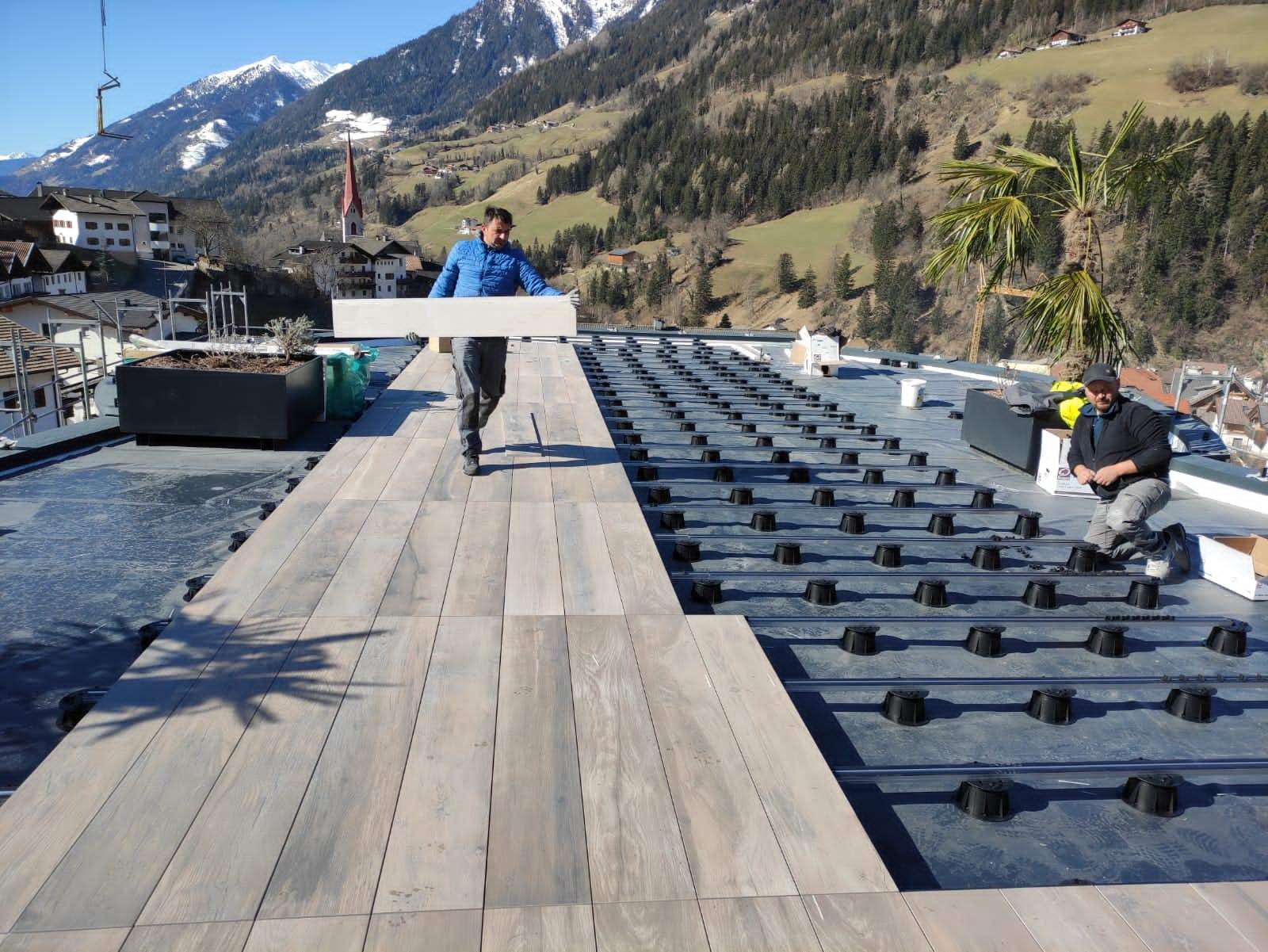
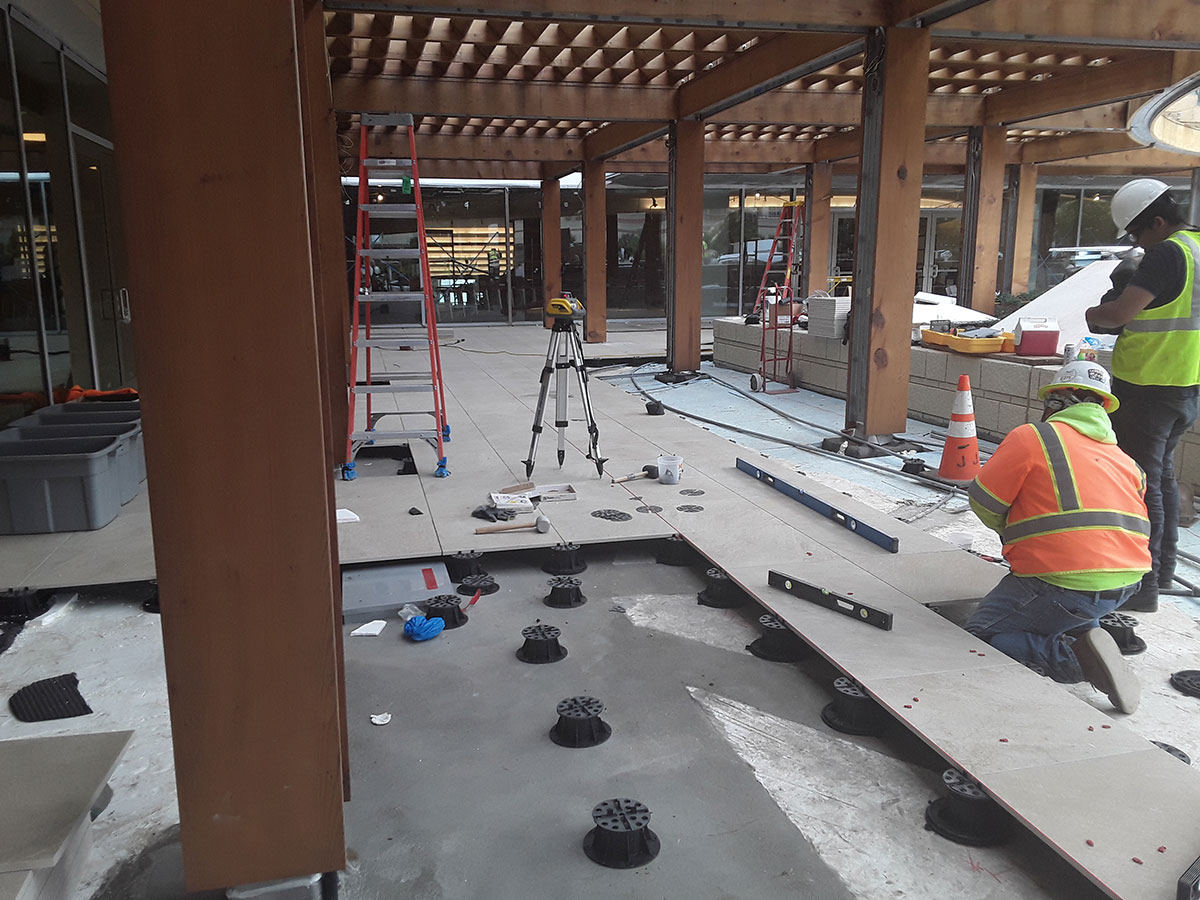
Both natural stone and porcelain pavers can be installed using a variety of traditional paving methods, including sand-set, gravel-set, concrete, or grass, while elevated installations can use pedestal-supported systems. With HDG Silca Grates, either material can be installed over traditional wood joist construction—even on decks 2 feet—or 20 feet—above grade.
Porcelain pavers offer a lightweight alternative that is particularly well suited to elevated and pedestal-set applications. For elevated deck installations, porcelain paver planks combined with the E-BRS Aluminum Joist System can speed installation and potentially reduce installed costs.
Joint maintenance: Installation method can also affect long-term maintenance. Sand, grout, and polymeric-sand joints can be susceptible to erosion or blowout during pressure washing. Pedestal-set pavers with controlled spacing provided by spacer tabs eliminate the need for filled joints and can simplify cleaning and maintenance.
8. Durability & Longevity
Both natural stone and porcelain pavers can provide decades of service. The durability and expected service life of either material depend on the material itself, the installation method, environmental conditions, and the demands of the application.
Porcelain pavers offer excellent resistance to freeze-thaw cycles, scratching, fading, and staining. Their very low water absorption helps them perform well in applications exposed to moisture and changing weather conditions.
Natural stone can offer exceptional impact resistance when the appropriate stone and thickness are specified. Many natural stones also develop character and patina over time, and properly selected and installed stone can provide an exceptionally long service life—potentially lasting for generations. Performance varies by stone type, porosity, climate, installation, and maintenance. Sealing porous stone can provide additional protection against water absorption and staining and may help reduce damage associated with freeze-thaw exposure.
For elevated pedestal-set applications, HDG offers wind uplift solutions for natural stone and porcelain pavers, as well as Paver Defense Solutions designed to help reduce the risk of accidents if a paver breaks. In the event of breakage caused by excessive point loads or sudden impact, these systems help prevent the broken paver from falling through the raised floor, reducing the risk of falls.
9. Cost: Material vs. Installation
Material costs vary widely for both natural stone and porcelain pavers depending on the material, size, thickness, finish, fabrication, and quantity. Installed cost can tell a very different story. Installation method, substrate, access, labor, site conditions, and customization can make either material more economical depending on the project.
Natural stone can often be cut and worked on site using hand and machine tools, while porcelain typically requires wet-saw cutting with diamond-tipped blades, which can increase labor for complex layouts.
Installation systems can also change the equation. A pedestal-set porcelain installation using E-BRS Aluminum Joists and Buzon pedestals, for example, may cost less to install than an on-grade natural stone installation despite requiring additional components.
Finally, consider total cost of ownership, including maintenance, sealing, repairs, and eventual replacement.
The most cost-effective choice depends on the specific project, not simply on the price per square foot of the paver.
10. Sustainability
Sustainability is another consideration when choosing between natural stone and porcelain pavers. The environmental impact of each option depends on factors such as whether stone is reclaimed or newly quarried, how materials are manufactured and transported, how long they remain in service, and whether they can be reused or recycled at the end of their service life.
Reclaimed stone extends the life of an existing material while preserving its character, history, and embodied value. Rather than requiring new extraction and manufacturing, reclaimed stone puts an existing resource back into service and supports the principles of a circular economy.
Newly quarried natural stone and manufactured porcelain each have different environmental considerations. Quarrying, raw-material extraction, manufacturing, energy use, transportation, installation, and eventual reuse or disposal can all contribute to a material’s environmental footprint.
Durability and service life matter, too. A material that performs well for decades can reduce the need for replacement. When evaluating sustainability, consider the full lifecycle of the material, not simply how it is manufactured.
Which Is Right for Your Project?
When comparing porcelain pavers vs. natural stone, neither material is universally better. The right choice depends on the project’s application, design goals, structural requirements, maintenance expectations, and budget.
Natural stone pavers may be the better choice when:
- Authentic natural variation and character are important
- Custom sizes, shapes, thicknesses, or finishes are desired
- The design calls for unusual shapes, monumental pieces, or intricate details
- Heavy-duty vehicular applications require specific stone types, thicknesses, and installation methods
- The material needs to complement existing natural stone architecture
- Reclaimed materials are desired
- Natural aging and patina are desirable design characteristics
Porcelain pavers may be the better choice when:
- Low water absorption and stain resistance are important
- Low maintenance is a priority
- Weight is a consideration, particularly for elevated applications
- A rooftop, terrace, balcony, or other pedestal-set installation is being considered
- A consistent appearance or specific stone or wood aesthetic is desired
- A lightweight paver with standardized dimensions is advantageous
Explore the advantages in more detail: Beyond the Look: When Porcelain Outperforms Natural Stone examines where porcelain can outperform the materials it mimics—including stone, wood, concrete, and terrazzo.
Still deciding? HDG Building Materials can help you evaluate the options and select the material and installation system that best fits your project.
We Can Help You Select the Right Material
HDG Building Materials supports architects, designers, builders, landscape professionals, and owners comparing porcelain pavers vs. natural stone. Tell us about your project, and we’ll help you evaluate the options and determine which material and installation approach best fits your needs.